The Ancestor Hunt regularly adds and updates new collection links, as well as searches for and fixes broken links.
(This page's most recent update is May 2026)
Practical solutions for real genealogy research problems. Explore the new Field Guides
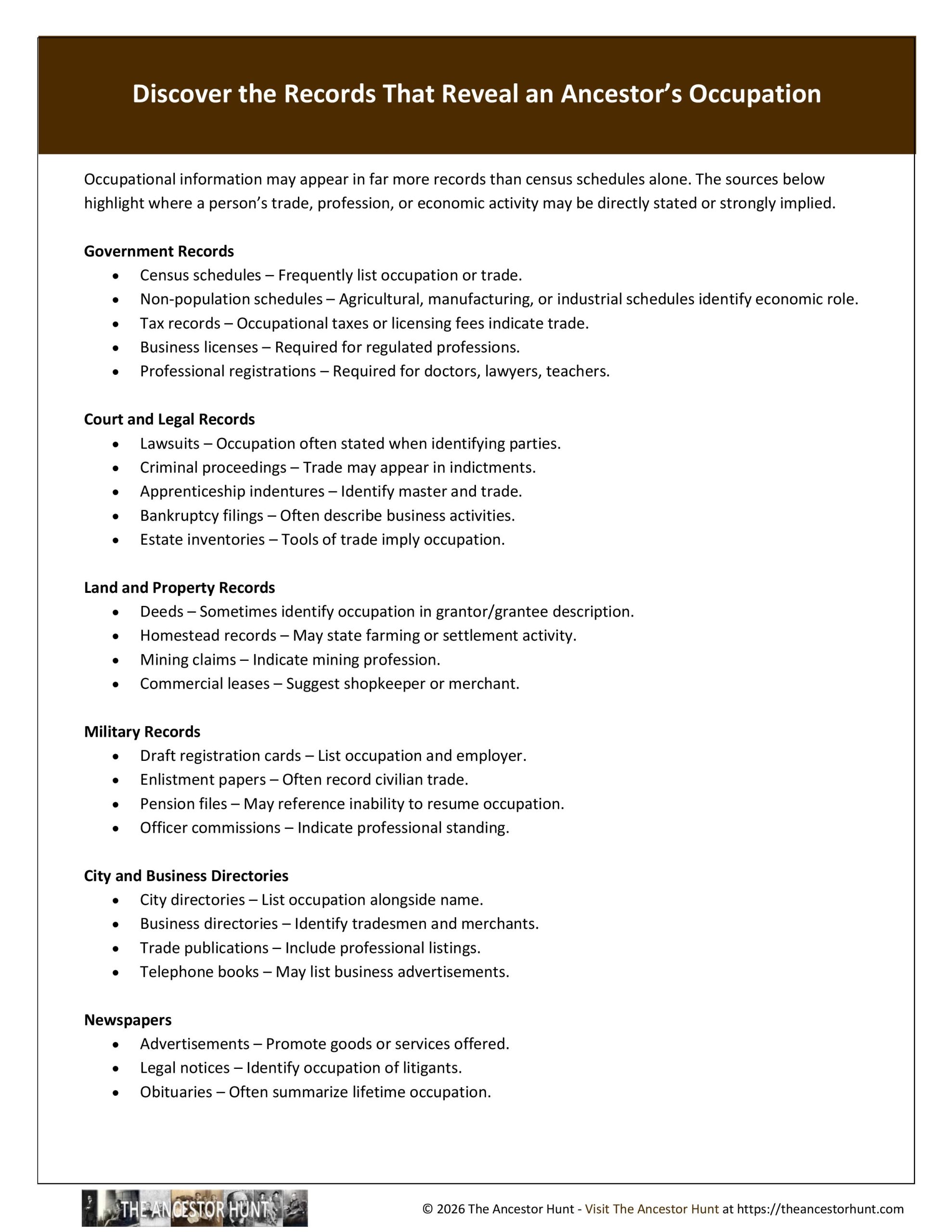
Occupational information may appear in far more records than census schedules alone. The sources below highlight where a person’s trade, profession, or economic activity may be directly stated or strongly implied.
Government Records
- Census schedules – Frequently list occupation or trade.
- Non-population schedules – Agricultural, manufacturing, or industrial schedules identify economic role.
- Tax records – Occupational taxes or licensing fees indicate trade.
- Business licenses – Required for regulated professions.
- Professional registrations – Required for doctors, lawyers, teachers.
Court and Legal Records
- Lawsuits – Occupation often stated when identifying parties.
- Criminal proceedings – Trade may appear in indictments.
- Apprenticeship indentures – Identify master and trade.
- Bankruptcy filings – Often describe business activities.
- Estate inventories – Tools of trade imply occupation.
Land and Property Records
- Deeds – Sometimes identify occupation in grantor/grantee description.
- Homestead records – May state farming or settlement activity.
- Mining claims – Indicate mining profession.
- Commercial leases – Suggest shopkeeper or merchant.
Military Records
- Draft registration cards – List occupation and employer.
- Enlistment papers – Often record civilian trade.
- Pension files – May reference inability to resume occupation.
- Officer commissions – Indicate professional standing.
City and Business Directories
- City directories – List occupation alongside name.
- Business directories – Identify tradesmen and merchants.
- Trade publications – Include professional listings.
- Telephone books – May list business advertisements.
Newspapers
- Advertisements – Promote goods or services offered.
- Legal notices – Identify occupation of litigants.
- Obituaries – Often summarize lifetime occupation.
- Social columns – Reference business ownership.
- Labor union reports – Indicate trade membership.
Church and Community Records
- Membership rolls – Sometimes list occupation.
- Vestry or board records – Identify professional status.
- Fraternal organization records – May require specific trades.
- Temperance or reform societies – Often occupation-based membership.
Educational and Institutional Records
- School board minutes – Identify teachers.
- College catalogs – List faculty positions.
- Trade school registers – Indicate vocational training.
- Professional examination records – Required for certification.
Visual and Physical Evidence
- Photographs – Tools or uniforms imply occupation.
- Headstones – Occasionally list trade or rank.
- Probate inventories – Specialized equipment suggests profession.
- Storefront signage in photos – Identifies business ownership.
Download the Quicksheet PDF
To obtain the Quicksheet PDF of this information, download it by clicking on the Download button below:
For all the previously published Quick Reference Guides, click on QuickSheets.
If you use Quicksheets often, the Quicksheet Vault puts 450+ of them in one organized place — clean, printable, and easy to reuse whenever you need them. Whether you keep digital references handy or build your own genealogy binder, the Vault makes research simpler. Learn more about the Quicksheet Vault HERE