The Ancestor Hunt regularly adds and updates new collection links, as well as searches for and fixes broken links.
(This page's most recent update is March 2026)
Want to improve your newspaper research skills? Become an AcademyPro member of the Newspaper Research Academy at Academy
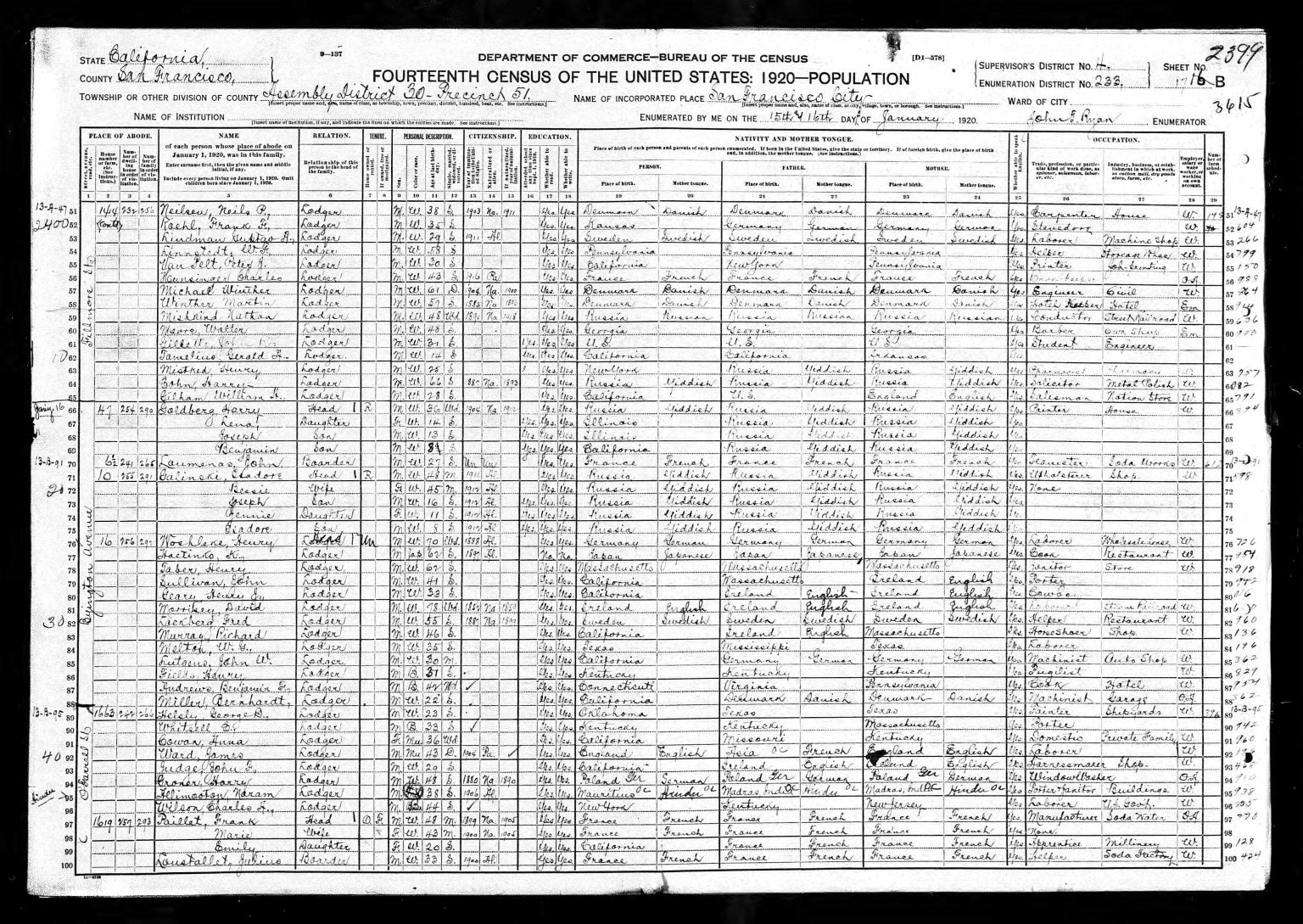
Census records often contain marginal notes, marks, and annotations that go beyond the standard columns. These details are frequently overlooked but can provide valuable clues about status, conditions, and special circumstances.
Enumerator Notes and Comments
- Written notes in margins – May explain unusual entries or corrections.
- Instructions or clarifications – Provide context for how data was recorded.
- Notations about absence – Indicate individuals temporarily away.
- Comments on household structure – Clarify relationships or living arrangements.
Corrections and Cross-Outs
- Names crossed out and rewritten – Suggest correction or replacement.
- Age or birthplace changes – Indicate uncertainty or updated information.
- Entire entries removed – Possible duplication or relocation.
- Overwritten data – May reflect later review or verification.
Symbols and Marks
- Check marks or ticks – May indicate verification or completion.
- Circles or brackets – Highlight specific individuals or households.
- Abbreviations or codes – Used by enumerators for classification.
- Unusual symbols – May require comparison with enumeration instructions.
Institutional or Special Status Notes
- “Inmate,” “patient,” or “pauper” written in margins – Indicates institutional residence.
- Notes about disability or condition – Additional details not captured in columns.
- Military or veteran annotations – Identify service status.
- Immigration or citizenship notes – Clarify legal standing.
Geographic and Household Clues
- Boundary notes – Indicate township or district changes.
- Household grouping marks – Help identify separate family units.
- Notations linking households – Suggest extended family or shared residence.
- Enumerator route notes – Explain order of entries.
Research Considerations
- Always review entire page, not just indexed data – Marginal notes are often missed.
- Compare neighboring entries – Notes may apply to multiple households.
- Consult census instructions for that year – Helps interpret symbols.
- Use marginal notes as supporting evidence – Not always fully explained elsewhere.
If you’d like this information in a clean, printable, and well-organized reference format, this topic is also included in the Quicksheet Vault. The Vault is designed for researchers who prefer working tools they can save, print, and reuse — whether that means building a personal binder of key resources or keeping reliable references close at hand. You can learn more about the Quicksheet Vault HERE