Background
Historical Occupation Profiles explain what ancestors actually did for a living and how those occupations shaped the records genealogists rely on today.
Occupation Overview
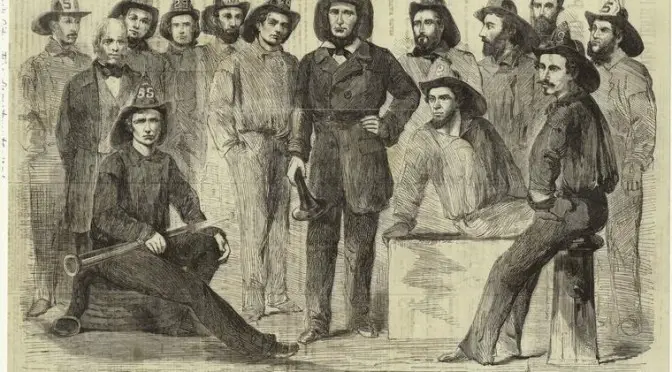
Firefighters were responsible for protecting communities from fires, responding to emergencies, and preserving life and property. In the nineteenth and early twentieth centuries, firefighting was often performed by volunteer fire companies, especially in towns and smaller cities.
Before the widespread establishment of fully paid municipal fire departments, local volunteer companies played a central role in fire protection. These organizations were often deeply embedded in community life, combining public service with social and civic identity.
As cities grew, many departments transitioned to paid, professional fire services, but volunteer companies remained common in many areas well into the twentieth century.
How the Job Was Described
Historical records may list:
- Fireman
- Firefighter
- Volunteer fireman
- Hoseman
- Engine man
- Driver (fire apparatus)
- Fire department member
In many cases, individuals listed with other occupations may have also served as volunteer firefighters. The role may not always appear as a primary occupation in census records.
Duties & Daily Work
Firefighters performed responsibilities such as:
- Responding to fire alarms and emergencies
- Operating hand pumps, hose carts, and later steam engines
- Extinguishing fires and preventing spread
- Rescuing individuals from burning structures
- Maintaining fire equipment and apparatus
- Participating in drills and training exercises
Volunteer firefighters often responded from their homes or workplaces when alarms were raised, balancing firefighting duties with regular employment.
Tools, Equipment & Work Environment
Firefighting relied on equipment such as:
- Hand-pumped fire engines
- Hose carts and ladders
- Buckets and early water systems
- Steam-powered fire engines (later period)
- Protective gear such as helmets and coats
Firehouses or engine houses served as storage and meeting locations for equipment and personnel.
Work environments were hazardous and unpredictable, involving exposure to heat, smoke, and collapsing structures.
Organization & Volunteer Structure
Firefighting in many communities was organized through:
- Volunteer fire companies
- Engine and hose companies
- Municipal fire departments
- Fraternal-style fire associations
Volunteer companies often had formal membership, elected officers, and social activities. Membership could carry prestige and strong community identity.
As cities expanded, professional paid departments increasingly replaced volunteer systems, though both often coexisted for a time.
Records Created by Fire Service
Firefighters may appear in:
- City directories
- Fire company membership rolls
- Municipal records and reports
- Newspaper accounts of fires and emergencies
- Photographs and local histories of fire companies
- Obituaries referencing fire service
In volunteer systems, records may be preserved in local historical societies or fire company archives.
A Note on Historical Context
Fire posed a constant threat in communities built largely of wood and heated by open flames or early heating systems. Major fires could devastate entire neighborhoods, making firefighting a critical public service.
Volunteer fire companies often functioned as social organizations as well as emergency responders. In some cities, rivalry between companies was common and sometimes documented in newspapers.
The gradual shift to professional fire departments reflected urban growth, technological advances, and the need for more organized emergency response.
Newspapers & Periodicals
Firefighters appear frequently in newspapers through:
- Reports of fires and emergencies
- Descriptions of firefighting efforts
- Accounts of major urban fires
- Fire company activities and events
- Obituaries noting years of service
Because fires were major public events, newspaper coverage is often detailed and descriptive.
Risks, Hazards & Legal Exposure
Firefighting was inherently dangerous, with risks including:
- Burns and smoke inhalation
- Structural collapse
- Explosions
- Injury from equipment or debris
Fatal incidents sometimes resulted in detailed newspaper reports, inquests, and memorial notices.
Industry Terminology (Selected)
- Engine company – Unit operating a fire engine
- Hose company – Group responsible for hose deployment
- Firehouse – Building housing equipment and personnel
- Alarm – Signal indicating a fire emergency
- Steam engine – Mechanized fire pump used in later periods
These terms frequently appear in newspaper reports and municipal records.
Selected Free Research Starting Points
Researchers may find useful background materials and contextual resources through:
- Library of Congress collections related to urban life and public safety
- National Archives records involving municipal and federal services
- State archives and local historical societies preserving fire company records
- University collections focused on urban and civic history
- Internet Archive and HathiTrust collections of firefighting manuals, municipal reports, and historical accounts
Availability varies by region and era, but these sources provide valuable context for understanding firefighting roles.
Why Firefighters Matter to Genealogical Research
Firefighters, particularly volunteers, were often deeply connected to their communities. Understanding their role helps genealogists identify civic involvement, social networks, and community standing, as well as locate records tied to fire companies, municipal services, and local events.
If you’d like this information in a clean, printable, and well-organized reference format, this topic is also included in the Quicksheet Vault. The Vault is designed for researchers who prefer working tools they can save, print, and reuse — whether that means building a personal binder of key resources or keeping reliable references close at hand. You can learn more about the Quicksheet Vault HERE