The Ancestor Hunt regularly adds and updates new collection links, as well as searches for and fixes broken links.
(This page's most recent update is March 2026)
Want to improve your newspaper research skills? Become an AcademyPro member of the Newspaper Research Academy at Academy
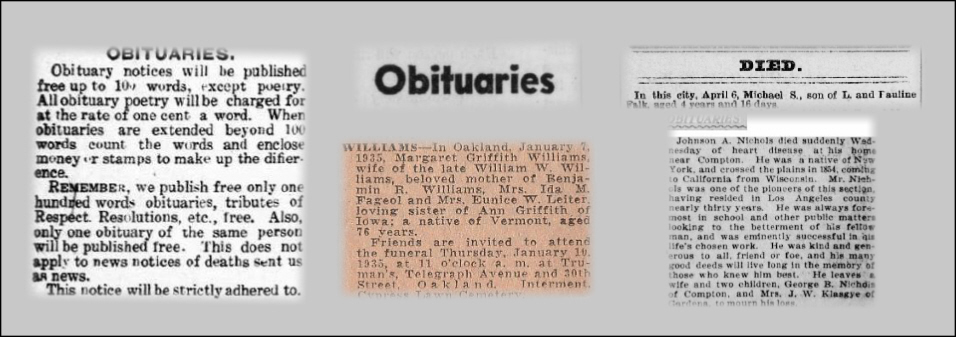
Obituaries are valuable sources of genealogical information, but they do not always exist or survive. When an obituary cannot be found, other records can provide similar details about death, family relationships, and community connections.
Vital and Death Records
- Death certificates – Provide date, place, and often family information.
- Burial permits – Document burial authorization and location.
- Coroner’s records – Include details of death circumstances.
- Mortality schedules – List deaths within census periods.
Cemetery and Burial Records
- Cemetery registers – Record burial date and plot location.
- Gravestones – Provide death dates and family connections.
- Funeral home records – Include services and family contacts.
- Sexton’s records – Document cemetery management details.
Newspapers and Local Sources
- Death notices – Short announcements without full obituary.
- Funeral notices – Provide service information.
- Legal notices – Estate or probate announcements.
- Community columns – Mentions of illness or death.
Probate and Estate Records
- Probate files – Identify heirs and property.
- Wills – Name family members and relationships.
- Estate inventories – Document assets at death.
- Letters of administration – Confirm death and estate handling.
Church and Religious Records
- Burial registers – Record interment details.
- Church death records – Document member deaths.
- Funeral service records – Include officiant and attendees.
- Parish registers – May include death entries.
Government and Institutional Records
- Social Security Death Index – Confirms death date.
- Pension files – May record death of recipient.
- Military records – Include death or burial information.
- Hospital or institutional records – Document death in care facilities.
If you’d like this information in a clean, printable, and well-organized reference format, this topic is also included in the Quicksheet Vault. The Vault is designed for researchers who prefer working tools they can save, print, and reuse — whether that means building a personal binder of key resources or keeping reliable references close at hand. You can learn more about the Quicksheet Vault HERE