Background
Historical Occupation Profiles explain what ancestors actually did for a living and how those occupations shaped the records genealogists rely on today.
Occupation Overview
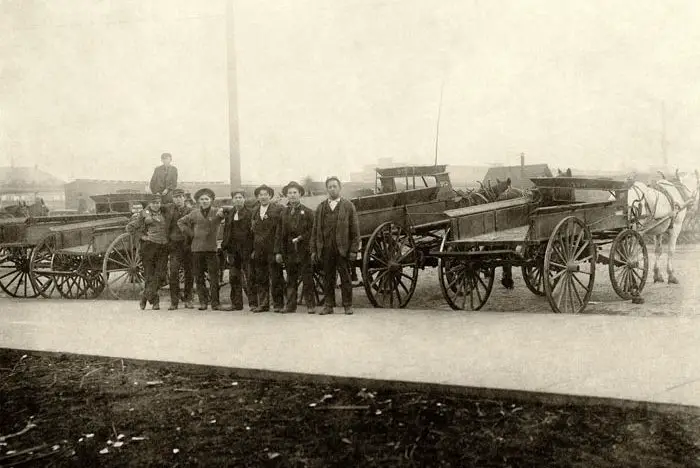
Teamsters and draymen were essential transportation workers in the nineteenth and early twentieth centuries. Before motorized trucks became widespread, goods were moved by horse-drawn wagons operated by skilled drivers.
“Teamster” referred broadly to a driver of a team of horses (or mules), while “drayman” often described a driver of a low, heavy wagon (dray) used for hauling freight within towns and cities. Together, they formed the backbone of short-distance commercial transport.
How the Job Was Described
Historical records may use:
- teamster
- drayman
- carter
- wagoner
- express driver
- freight hauler
- transfer man
In rural areas, a teamster might haul agricultural goods to market. In cities, draymen transported merchandise between docks, rail depots, warehouses, and stores.
The term “laborer” in an urban setting sometimes conceals teamster or dray work, especially when paired with transportation-related addresses.
Duties & Daily Work
Teamsters and draymen:
- Hauled freight from railroad depots to businesses
- Delivered goods to shops and residences
- Transported building materials
- Moved furniture and household goods
- Carried agricultural products to market
The work required skill in managing horses, navigating busy streets, and securing loads safely. Drivers often worked long hours and were responsible for both cargo and animals.
Tools, Equipment & Work Environment
The occupation centered on:
- Horse or mule teams
- Freight wagons and drays
- Harnesses and tack
- Loading equipment
- Stable facilities
Urban teamsters worked in crowded, rapidly industrializing environments. Rural teamsters covered longer distances, often across rough terrain.
Animals required daily care, meaning teamsters were closely tied to stables and supply yards—potential additional record sources.
Employment Structure & Business Arrangements
Teamsters might:
- Work independently with their own wagon and team
- Be employed by freight companies
- Work for warehouses or mercantile firms
- Contract with railroads or docks
Some owned small hauling businesses. Others were wage laborers within larger transportation networks.
City directories frequently list teamsters and draymen, often with stable or yard addresses.
Records Created by Teamster & Dray Work
Documentation may appear in:
- City directories
- Business licenses
- Stable permits and municipal registrations
- Freight and transfer company payroll records
- Court cases involving accidents or cargo disputes
- Tax records for wagons and teams
In major cities, transportation regulation increased in the late nineteenth century, generating additional municipal records.
A Note on Historical Context
Before motor trucks reshaped freight systems, nearly every urban and rural economy depended on horse-drawn hauling. The growth of railroads actually increased demand for teamsters, as goods needed transfer between depots and final destinations.
With the rise of motorized vehicles in the early twentieth century, many teamsters transitioned into truck driving. This shift helps explain occupational changes between 1900, 1910, and 1920 census records.
Newspapers & Periodicals
Teamsters and draymen appear in newspapers through:
- Street accidents involving wagons
- Freight disputes
- Labor strikes and organizing efforts
- Theft or loss of cargo
- Obituaries noting years in hauling trades
Because they operated in public spaces, accidents and incidents were frequently reported.
Risks, Accidents & Legal Exposure
Common hazards included:
- Wagon collisions
- Runaway horses
- Load-related injuries
- Streetcar or rail crossing accidents
- Animal-related injuries
Urban congestion made transportation work especially dangerous. Serious incidents often resulted in court cases and newspaper coverage.
Industry Terminology (Selected)
- Dray – Low, heavy wagon used for hauling
- Team – Pair (or more) of horses or mules
- Carter – Wagon driver
- Transfer company – Business moving freight between locations
- Stable yard – Facility housing work animals
These terms frequently appear in city records and newspapers.
Selected Free Research Starting Points
Researchers may find useful background materials and, in some cases, occupational records through:
- Library of Congress: historic photographs of urban freight and transportation
- National Archives: federal labor and transportation documentation
- State archives and municipal collections for licensing and regulation records
- Nonprofit and scholarly transportation history sites
- Internet Archive and HathiTrust: trade manuals, freight company reports, and transportation histories
Availability varies by city and era, but these sources provide valuable occupational context.
Why Teamsters & Draymen Matter to Genealogical Research
Teamsters and draymen occupied a visible, transitional role between animal-powered and motorized transport. Understanding this occupation helps genealogists interpret urban labor patterns, business ownership, migration tied to industrial growth, and later shifts into trucking or mechanical trades.
If you use Quicksheets often, the Quicksheet Vault puts 450+ of them in one organized place — clean, printable, and easy to reuse whenever you need them. Whether you keep digital references handy or build your own genealogy binder, the Vault makes research simpler. Learn more about the Quicksheet Vault HERE