Background
Historical Occupation Profiles explain what ancestors actually did for a living and how those occupations shaped the records genealogists rely on today.
Occupation Overview
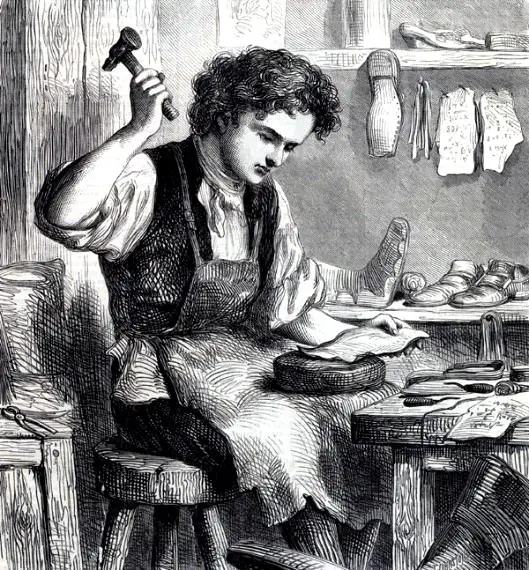
Shoemakers and cobblers produced and repaired footwear in communities across the eighteenth, nineteenth, and early twentieth centuries. Before mass manufacturing dominated the industry, shoemaking was a skilled trade practiced in small shops, homes, and later in organized factories.
While the terms are sometimes used interchangeably, “shoemaker” traditionally referred to someone who made new shoes, while “cobbler” primarily repaired worn footwear. In many records, however, the distinction is blurred.
How the Job Was Described
Historical records may list:
- shoemaker
- cobbler
- cordwainer
- bootmaker
- boot and shoe maker
- shoe repairer
- operative (shoe factory context)
“Cordwainer” is an older term for a skilled shoemaker working with fine leather. In factory towns, workers may appear as “shoe operative” or simply “operative.”
City directories often provide more specific titles than census records.
Duties & Daily Work
Shoemakers working independently:
- Cut leather patterns
- Stitched uppers
- Shaped soles
- Assembled boots and shoes by hand
- Repaired worn or damaged footwear
Cobblers typically:
- Replaced soles and heels
- Patched leather
- Repaired stitching
- Conditioned and reshaped shoes
With industrialization in the mid- to late nineteenth century, many shoemakers transitioned into factory-based production, where labor became specialized and divided among workers.
Tools, Equipment & Work Environment
Traditional shoemaking relied on:
- Lasts (foot-shaped forms)
- Awls and needles
- Hammers and knives
- Stitching tools
- Leather-cutting implements
Factory shoemakers worked with:
- Sewing machines
- Mechanical stitching devices
- Assembly-line equipment
Independent shops were often small storefronts or home-based workspaces, making shoemakers highly visible within local communities.
Apprenticeship & Trade Structure
Shoemaking was commonly learned through apprenticeship. Young men might train under a master shoemaker before establishing their own shop.
Records may appear in:
- Apprenticeship contracts
- Guild or trade records (in earlier periods)
- Probate inventories listing tools
- Business licenses
- Newspaper advertisements
As factories expanded, the traditional apprenticeship model shifted toward wage labor within manufacturing plants.
Records Created by Shoemaking
Shoemakers and cobblers may appear in:
- City directories
- Tax rolls
- Business advertisements
- Shop signage notices
- Probate records listing tools and materials
- Factory payroll records
- Labor union documentation (in industrial centers)
In regions known for shoe manufacturing, entire communities developed around the trade, creating concentrated occupational clusters.
A Note on Historical Context
In the early nineteenth century, shoemaking was often performed in homes or small shops. As mechanization advanced, particularly in New England and parts of the Midwest, shoe production became increasingly factory-based.
This shift explains occupational transitions such as:
- Shoemaker → factory operative
- Cordwainer → bootmaker
- Independent craftsman → wage laborer
Understanding the industrial evolution of shoemaking helps interpret changes across census decades.
Newspapers & Periodicals
Shoemakers and cobblers appear in newspapers through:
- Business advertisements
- Shop openings and relocations
- Bankruptcy or debt notices
- Apprenticeship announcements
- Obituaries referencing long-standing shops
In manufacturing towns, strikes and factory labor disputes also generated coverage.
Risks, Hazards & Economic Vulnerability
Though less dangerous than heavy industry, shoemaking carried risks:
- Tool-related hand injuries
- Long-term physical strain
- Economic instability due to factory competition
Independent cobblers were particularly vulnerable to shifts in manufacturing and consumer demand.
Industry Terminology (Selected)
- Last – Foot-shaped form used in constructing shoes
- Cordwainer – Skilled shoemaker
- Bootmaker – Maker of boots
- Upper – Upper portion of a shoe
- Operative – Factory worker
These terms often appear in directories, probate inventories, and trade advertisements.
Selected Free Research Starting Points
Researchers may find useful background materials and contextual resources through:
- Library of Congress: photographs and industrial surveys
- National Archives: labor and manufacturing records
- State archives and university collections in major shoe-manufacturing regions
- Scholarly and nonprofit labor history sites
- Internet Archive and HathiTrust: trade manuals, boot and shoe industry reports, and manufacturing publications
Availability varies by region and era, but these sources provide valuable occupational context.
Why Shoemakers & Cobblers Matter to Genealogical Research
Shoemakers and cobblers represent a transitional trade that bridges traditional craftsmanship and early industrial factory labor. Recognizing distinctions in terminology and production methods helps genealogists interpret occupational continuity, economic status, and geographic movement across generations.
If you use Quicksheets often, the Quicksheet Vault puts 450+ of them in one organized place — clean, printable, and easy to reuse whenever you need them. Whether you keep digital references handy or build your own genealogy binder, the Vault makes research simpler. Learn more about the Quicksheet Vault HERE