The Ancestor Hunt regularly adds and updates new collection links, as well as searches for and fixes broken links.
(This page's most recent update is February 2026)
Want to improve your newspaper research skills? Become an AcademyPro member of the Newspaper Research Academy at Academy
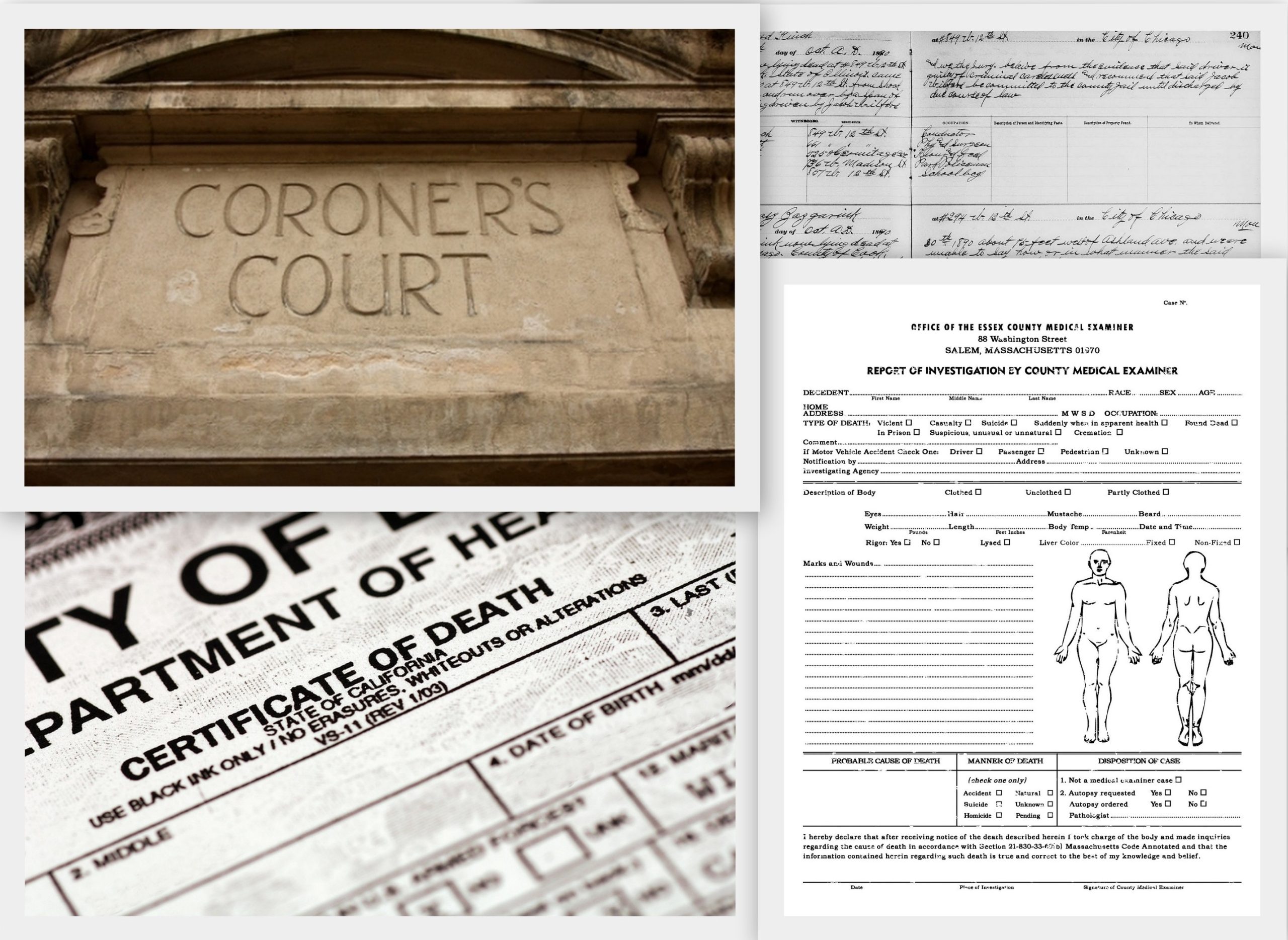
Coroner’s records and inquest proceedings can provide critical details about sudden, suspicious, or unexplained deaths. These records often include testimony, medical findings, witness statements, and jury verdicts. Understanding the terminology used in inquest files helps genealogists interpret cause of death, circumstances, and legal conclusions.
| Term | Meaning |
| Coroner | Public official responsible for investigating certain types of deaths. |
| Inquest | Formal legal inquiry into the cause and circumstances of a death. |
| Coroner’s Jury | Panel of citizens assembled to determine cause of death. |
| Verdict | Official conclusion of the inquest jury. |
| Cause of Death | Medical reason for death as determined by investigation. |
| Manner of Death | Legal classification (natural, accidental, homicide, suicide, undetermined). |
| Postmortem | Examination conducted after death; autopsy. |
| Autopsy | Medical examination of a body to determine cause of death. |
| Viewing the Body | Formal inspection of the deceased by the coroner or jury. |
| Deposition | Sworn written testimony of a witness. |
| Testimony | Oral or written statement given under oath. |
| Affidavit | Sworn written statement. |
| Subpoena | Legal order requiring appearance at an inquest. |
| Writ | Formal legal document issued by authority. |
| Summons | Notice requiring attendance at legal proceeding. |
| Juror | Member of the coroner’s jury. |
| Foreman | Leader of the inquest jury. |
| Physician’s Report | Medical statement regarding condition or injuries. |
| External Examination | Visual inspection of the body without dissection. |
| Internal Examination | Examination involving dissection (autopsy). |
| Toxicology | Testing for poisons or substances in the body. |
| Asphyxiation | Death caused by lack of oxygen. |
| Apoplexy | Historical term for stroke. |
| Consumption | Historical term for tuberculosis. |
| Misadventure | Accidental death (older legal term). |
| Felonious Killing | Death resulting from criminal act. |
| Justifiable Homicide | Killing deemed legally permissible. |
| Self-inflicted | Injury caused by oneself; may indicate suicide. |
| Undetermined | Cause or manner of death could not be conclusively established. |
| Suspicious Circumstances | Death requiring further investigation. |
| Accidental Drowning | Death by drowning without intent. |
| Blunt Force Trauma | Injury caused by impact with blunt object. |
| Gunshot Wound | Injury caused by firearm discharge. |
| Incised Wound | Cut produced by sharp instrument. |
| Contusion | Bruise caused by blunt impact. |
| Laceration | Tear or jagged wound. |
| Fracture | Broken bone. |
| Exposure | Death resulting from environmental conditions. |
| Natural Causes | Death due to disease or internal medical condition. |
| Coroner’s Certificate | Official document summarizing findings of inquest. |
| Return of Inquest | Filed report of jury’s verdict. |
| Commitment | Legal action following inquest if criminal responsibility indicated. |
If you’d like this information in a clean, printable, and well-organized reference format, this topic is also included in the Quicksheet Vault. The Vault is designed for researchers who prefer working tools they can save, print, and reuse — whether that means building a personal binder of key resources or keeping reliable references close at hand. You can learn more about the Quicksheet Vault HERE