Background
Historical Occupation Profiles explain what ancestors actually did for a living and how those occupations shaped the records genealogists rely on today.
Occupation Overview
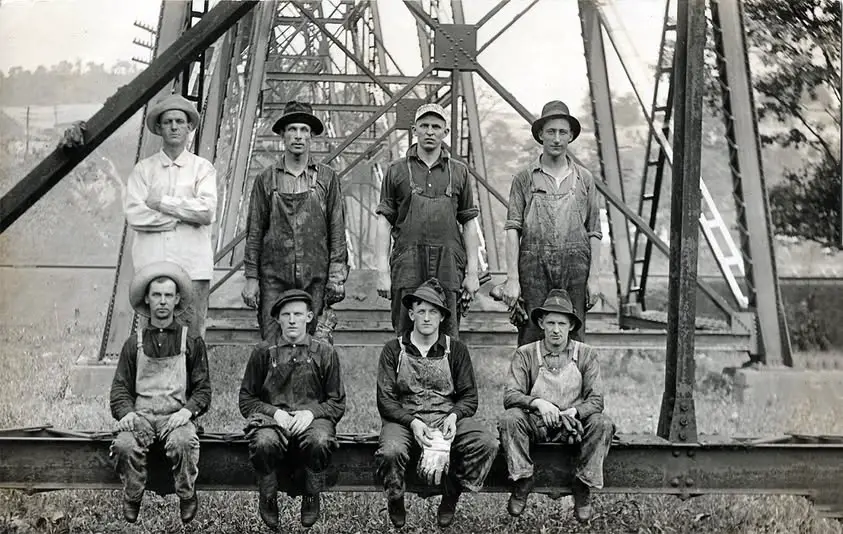
Bridge builders constructed structures that allowed roads, railroads, and canals to cross rivers, valleys, and other obstacles. In the nineteenth and early twentieth centuries, bridge building was essential to transportation expansion and economic development.
Bridge construction involved a combination of skilled trades and labor, including carpenters, masons, ironworkers, and engineers. Projects ranged from small wooden crossings in rural areas to large iron and steel bridges in growing cities and along railroad lines.
Bridge builders were often part of specialized crews that moved from project to project as infrastructure expanded.
How the Job Was Described
Historical records may list:
- Bridge builder
- Bridge carpenter
- Bridge worker
- Iron bridge worker
- Construction worker (bridge context)
- Railroad bridge worker
- Engineer (bridge construction context)
- Laborer (on bridge projects)
Titles may vary depending on skill level and specialization. Skilled workers might be identified as carpenters or ironworkers, while others may appear simply as laborers.
Duties & Daily Work
Bridge builders performed a wide range of tasks depending on the project:
- Preparing construction sites and foundations
- Building wooden or stone supports
- Assembling iron or steel framework
- Installing decking and structural components
- Operating lifting equipment
- Repairing and maintaining existing bridges
Work was often project-based and required coordination among multiple trades. Crews frequently worked in challenging environments, including over water or at significant heights.
Tools, Equipment & Work Environment
Bridge construction relied on tools and equipment such as:
- Hammers and chisels
- Saws and cutting tools
- Riveting equipment
- Hoists and cranes
- Scaffolding and temporary supports
- Heavy materials such as timber, stone, iron, and steel
Work environments were often hazardous, involving elevated structures, moving equipment, and exposure to weather conditions.
Employment Structure & Project Work
Bridge builders were commonly employed by:
- Railroad companies
- Construction firms
- Government public works projects
- Engineering companies
- Independent contractors
Workers often moved from one project to another, resulting in temporary residence patterns and geographic mobility.
Large projects might involve extended stays in a single location, while smaller projects could be completed quickly.
Records Created by Bridge Construction Work
Bridge builders may appear in:
- City directories
- Railroad employment records
- Construction company payrolls
- Government project reports
- Contract and bid records
- Court records involving construction disputes
- Newspaper accounts of major projects
Because bridge projects were often public works, documentation may exist in government or engineering records.
A Note on Historical Context
The expansion of railroads and road networks in the nineteenth century created a significant demand for bridges. Advances in engineering led to the transition from wooden bridges to iron and steel structures.
Bridge building was closely tied to industrial growth and regional development. Major projects often became local landmarks and were documented in newspapers and official reports.
Understanding this context helps explain the presence of bridge builders in rapidly developing regions.
Newspapers & Periodicals
Bridge builders appear in newspapers through:
- Announcements of new bridge projects
- Construction progress reports
- Accidents and structural failures
- Contract awards and bids
- Community reports on infrastructure improvements
Large or notable bridge projects were often covered in detail, sometimes naming contractors or engineers.
Risks, Accidents & Working Conditions
Bridge construction was hazardous, with risks including:
- Falls from height
- Structural collapse during construction
- Injuries from heavy materials
- Equipment-related accidents
- Exposure to weather and environmental conditions
Serious accidents could result in newspaper coverage, legal cases, or government investigations.
Industry Terminology (Selected)
- Span – Section of a bridge between supports
- Truss – Framework supporting a bridge
- Abutment – Structure supporting the ends of a bridge
- Pier – Support located between spans
- Riveting – Process of fastening metal components
These terms frequently appear in engineering reports, construction documents, and newspaper descriptions.
Selected Free Research Starting Points
Researchers may find useful background materials and contextual resources through:
- Library of Congress collections related to engineering and infrastructure
- National Archives records involving public works and transportation
- State archives preserving construction and engineering records
- University collections focused on civil engineering and industrial history
- Internet Archive and HathiTrust collections of engineering manuals, bridge design guides, and technical reports
Availability varies by region and era, but these sources provide valuable context for understanding bridge construction work.
Why Bridge Builders Matter to Genealogical Research
Bridge builders were part of mobile construction crews that contributed to major infrastructure projects. Understanding their work helps genealogists interpret temporary residence patterns, employment tied to public works, and the presence of ancestors in rapidly developing regions.
If you’d like this information in a clean, printable, and well-organized reference format, this topic is also included in the Quicksheet Vault. The Vault is designed for researchers who prefer working tools they can save, print, and reuse — whether that means building a personal binder of key resources or keeping reliable references close at hand. You can learn more about the Quicksheet Vault HERE