Background
Historical Occupation Profiles explain what ancestors actually did for a living and how those occupations shaped the records genealogists rely on today.
Occupation Overview
Lumber workers harvested, transported, and processed timber for construction, fuel, and industrial use. During the nineteenth and early twentieth centuries, lumbering was a cornerstone industry across the Northeast, Upper Midwest, Pacific Northwest, and parts of the South.
Like mining and railroad work, lumbering was seasonal, dangerous, and highly mobile, producing a scattered but often revealing record trail. The term “lumber worker” covers a wide range of jobs performed in forests, camps, rivers, rail spurs, and sawmills.
How the Job Was Described
Historical records usually identify lumber workers by task or setting, rather than by a single standardized title.
Common descriptions include:
- lumberman
- logger
- woodsman
- sawyer
- teamster (logging context)
- river driver / log driver
- mill hand
- sawmill worker
A man listed as a “laborer” in a timber region may, in practice, have been engaged in lumber work—especially during winter cutting seasons.
Duties & Daily Work
Lumber work followed a predictable cycle tied to climate and geography:
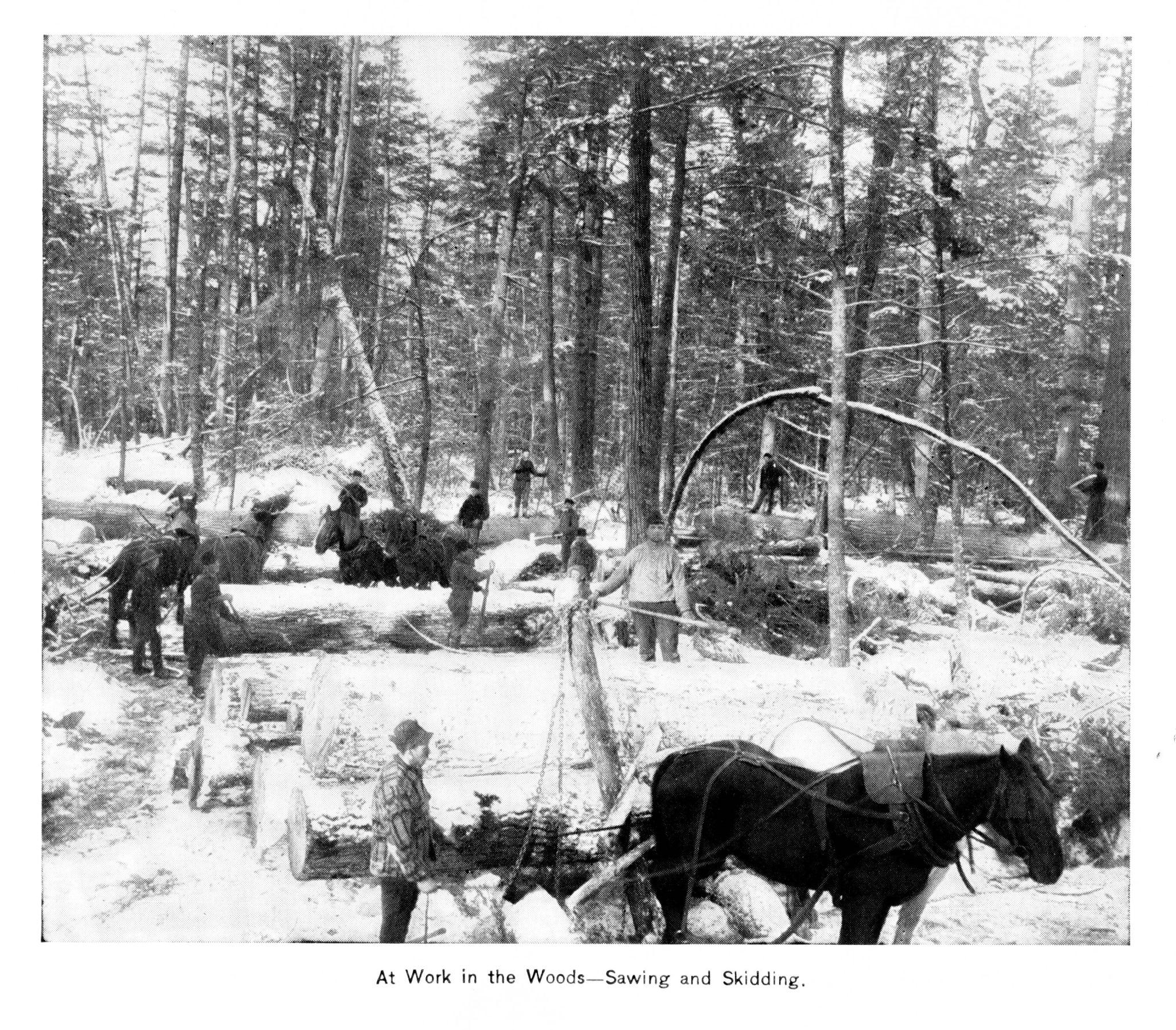
- Forest crews felled trees, trimmed branches, and prepared logs.
- Hauling crews moved logs by sled, wagon, or rail spur.
- River drivers guided logs downstream during spring drives.
- Sawmill workers processed logs into usable lumber.
Many workers shifted roles seasonally, which helps explain frequent occupational changes in census and directory records.
Tools, Equipment & Work Environment
Lumbering relied on heavy tools and physically demanding labor:
- Crosscut saws and axes
- Logging sleds and wagons
- Peaveys and cant hooks
- Log booms and splash dams
- Steam-powered sawmills
Work took place in remote forests and camps, often far from towns, contributing to underdocumentation outside of peak events such as accidents or labor disputes.
Organizations, Unions & Professional Life
Unlike some industrial trades, lumber workers were often organized around camps rather than formal unions, especially before the twentieth century.
That said, records may surface through:
- Camp payrolls or company records
- Regional labor organizations
- Early lumber workers’ unions
- Boardinghouse and camp provisioning accounts
Living and working among transient crews shaped both social life and record creation.
Records Created by Lumber Work
Lumbering generated records across multiple layers:
- Company employment and payroll records
- Timber land and cutting contracts
- Camp supply and provisioning records
- Accident and injury reports
- Coroner’s inquests and court proceedings
- Union or labor organization files
- Sawmill inspection and licensing records
Many of these records survive in state archives, university collections, and regional historical societies.
A Note on Historical Context
Lumbering drove settlement patterns in timber-rich regions. Entire towns emerged around mills, only to decline once forests were exhausted. Workers often followed timber frontiers westward or southward, creating geographic gaps that can puzzle genealogists unfamiliar with the industry’s mobility.
Understanding lumber work helps explain why an ancestor may appear briefly in a location with little permanent documentation.
Newspapers & Periodicals
Mining was highly visible and frequently covered in newspapers Lumber workers appear regularly in newspapers due to the industry’s visibility and risk.
Common coverage includes:
- Camp accidents and fatalities
- River drive mishaps
- Mill fires and explosions
- Labor shortages or strikes
- Community notices involving camps and mills
Newspapers often supply narrative detail absent from company records.
Risks, Accidents & Legal Exposure
Lumbering was among the most hazardous occupations of its era.
Common dangers included:
- Falling trees and rolling logs
- River drownings during log drives
- Mill machinery injuries
- Fires in camps and mills
Serious incidents often produced multiple records, including newspaper accounts, inquests, and court cases
Industry Terminology (Selected)
- Peavey – Levered tool used to move logs
- Cant hook – Log-handling tool similar to a peavey
- Log drive – Transporting logs downriver
- Boom – Barrier used to collect floating logs
- Sawmill – Facility where logs were cut into lumber
These terms frequently appear without explanation in historical sources.
Selected Free Research Starting Points
Researchers may find useful background materials and, in some cases, occupational records through:
- Library of Congress: photographs, industry reports, regional collections
- National Archives: timber lands, federal forestry, labor and inspection records
- State archives & university projects: logging camps, sawmills, regional industries
- Nonprofit and scholarly sites focused on forestry and labor history
- Internet Archive and HathiTrust: lumber trade journals, forestry reports, and technical manuals
Availability varies by region and era, but these sources provide valuable context.
Why Lumber Workers Matter to Genealogical Research
Lumber work shaped migration, family stability, and community development in timber regions. Understanding how lumber workers lived and worked helps genealogists interpret vague occupational labels, explain short-term residence patterns, and identify overlooked record sources tied to camps, mills, and timber operations.
If you’d like this information in a clean, printable, and well-organized reference format, this topic is also included in the Quicksheet Vault. The Vault is designed for researchers who prefer working tools they can save, print, and reuse—whether that means building a personal binder of key resources or keeping reliable references close at hand. You can learn more about the Quicksheet Vault HERE