Background
Historical Occupation Profiles explain what ancestors actually did for a living and how those occupations shaped the records genealogists rely on today.
Occupation Overview
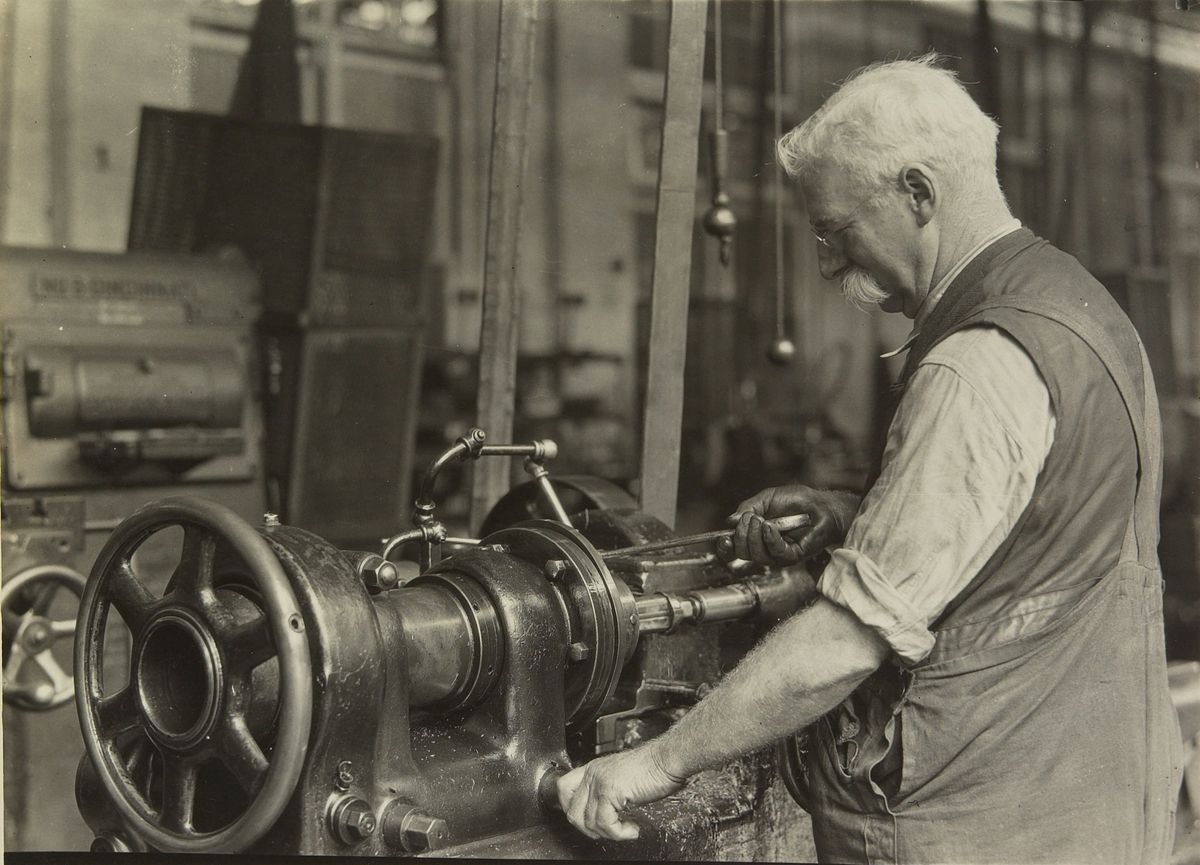
Machinists were skilled industrial workers who operated and maintained machine tools used to manufacture metal parts. In the nineteenth and early twentieth centuries, machinists played a central role in railroads, factories, shipyards, steel plants, and emerging mechanical industries.
Unlike general laborers, machinists required technical skill and precision. They worked with measurements, metal shaping equipment, and increasingly complex machinery as industrialization advanced.
Machinists frequently appear in census and directory records in rapidly industrializing regions.
How the Job Was Described
Historical records may list:
- Machinist
- Master machinist
- Journeyman machinist
- Machine operator
- Toolmaker
- Boilermaker (in some industrial contexts)
- Mechanic (industrial context)
- Shop hand (in machine shop settings)
In railroad records, machinists were often associated with locomotive or repair shops.
Context is important, as “mechanic” and “machinist” may overlap in certain records.
Duties & Daily Work
Machinists typically performed work such as:
- Operating lathes and milling machines
- Cutting and shaping metal parts
- Repairing mechanical equipment
- Constructing precision components
- Maintaining industrial machinery
- Fitting and assembling metal parts
In railroad shops, machinists repaired locomotives and rail equipment. In factories, they maintained production machinery and created custom components.
Apprenticeship or formal training was common, and machinists were often considered skilled tradesmen within industrial hierarchies.
Tools, Equipment & Work Environment
Machinists worked with:
- Lathes
- Milling machines
- Drill presses
- Calipers and precision measuring tools
- Wrenches and hand tools
- Metal cutting instruments
Work environments included railroad repair shops, steel mills, manufacturing plants, shipyards, and independent machine shops.
Conditions could be noisy, oily, and physically demanding.
Employment Structure & Labor Organization
Machinists were often employed by:
- Railroad companies
- Manufacturing firms
- Shipyards
- Industrial plants
- Independent machine shops
Machinists were among the early organized skilled trades and frequently participated in labor unions. Union records may exist in some regions.
Skilled machinists often experienced upward mobility within industrial communities.
Records Created by Machinist Work
Machinists may appear in:
- City directories
- Railroad employment records
- Factory payroll lists
- Apprenticeship contracts
- Union membership rolls
- Industrial accident reports
- Workers’ compensation records
- Company newsletters or shop publications
Because machinists worked in regulated industrial environments, accident and employment documentation may be more extensive than for general laborers.
A Note on Historical Context
As railroads expanded and factories multiplied, machinists became essential to maintaining mechanical systems. The growth of automobiles, shipbuilding, and heavy manufacturing increased demand for skilled machinists in the late nineteenth and early twentieth centuries.
Occupational titles may shift across decades, especially as industries evolved. A machinist in 1880 might appear as a factory foreman or mechanical supervisor in later records.
Understanding industrial growth patterns helps explain geographic clustering in manufacturing regions.
Newspapers & Periodicals
Machinists appear in newspapers through:
- Industrial accident reports
- Labor strikes and union activity
- Railroad shop expansions
- Factory openings or closures
- Obituaries referencing years in skilled trades
Because machinists worked in visible industrial settings, workplace disputes and accidents were often reported.
Risks, Accidents & Legal Exposure
Machinists faced occupational hazards such as:
- Machinery entanglement
- Metal fragment injuries
- Burns from hot materials
- Heavy equipment accidents
- Long-term physical strain
Industrial accidents frequently generated legal proceedings, compensation claims, and newspaper coverage.
Industry Terminology (Selected)
- Lathe – Machine tool used to shape rotating metal
- Milling machine – Tool used to cut and shape solid materials
- Journeyman – Skilled worker who completed apprenticeship
- Apprentice – Worker training in the trade
- Machine shop – Workshop where machining takes place
These terms commonly appear in employment records, union documentation, and industrial publications.
Selected Free Research Starting Points
Researchers may find useful background materials and contextual resources through:
- Library of Congress collections on industrial labor and manufacturing
- National Archives records related to railroads and industrial employment
- State archives and university collections in manufacturing regions
- Scholarly and nonprofit labor history sites
- Internet Archive and HathiTrust collections of machinist manuals and industrial trade publications
Availability varies by region and era, but these sources provide valuable occupational context.
Why Machinists Matter to Genealogical Research
Machinists were skilled industrial workers central to railroad, manufacturing, and mechanical industries. Recognizing machinist-related terminology and industrial employment patterns helps genealogists interpret economic status, geographic mobility, and transitions within industrial communities.
If you’d like this information in a clean, printable, and well-organized reference format, this topic is also included in the Quicksheet Vault. The Vault is designed for researchers who prefer working tools they can save, print, and reuse — whether that means building a personal binder of key resources or keeping reliable references close at hand. You can learn more about the Quicksheet Vault HERE