Background
Historical Occupation Profiles explain what ancestors actually did for a living and how those occupations shaped the records genealogists rely on today.
Occupation Overview
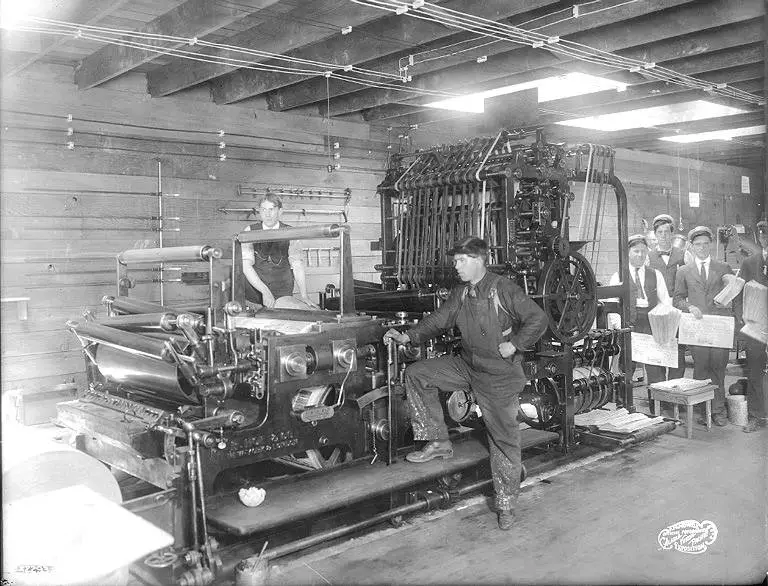
Printers and printing press operators produced newspapers, books, pamphlets, and other printed materials using mechanical presses and typesetting systems. In the eighteenth, nineteenth, and early twentieth centuries, printing was a skilled trade central to communication, commerce, and public life.
Printing establishments ranged from small local newspaper offices to large commercial publishing houses. Printers played a key role in disseminating news, legal notices, advertisements, and community information.
How the Job Was Described
Historical records may list:
- Printer
- Pressman
- Printing press operator
- Typesetter
- Compositor
- Linotype operator
- Typographer
- Book printer
- Newspaper printer
In earlier records, “printer” often included both typesetting and press operation. Later, specialized roles such as compositor or linotype operator became more common.
Context such as employment in a newspaper office or print shop can help clarify the specific role.
Duties & Daily Work
Printers and press operators performed a range of tasks depending on specialization:
- Setting type by hand or machine
- Arranging text for printing (composition)
- Operating printing presses
- Inking and maintaining press equipment
- Proofreading printed materials
- Producing newspapers, books, and job printing work
With the introduction of linotype machines in the late nineteenth century, typesetting became more mechanized, changing the nature of the work.
Printing often involved deadlines, especially in newspaper offices where daily or weekly publication schedules required consistent output.
Tools, Equipment & Work Environment
Printing relied on equipment such as:
- Printing presses (hand or mechanical)
- Movable type and type cases
- Linotype or typesetting machines
- Ink rollers and plates
- Composing sticks and trays
Work environments included print shops, newspaper offices, and publishing houses. These settings could be busy, noisy, and deadline-driven.
Printing shops were often located in commercial districts within towns and cities.
Apprenticeship & Trade Structure
Printing was traditionally learned through apprenticeship, with workers progressing through stages such as:
- Apprentice printer
- Journeyman printer
- Master printer or shop owner
As the industry evolved, specialized roles developed, including compositors and press operators.
Printing was considered a skilled trade, and many printers were literate and engaged in community and political life.
Records Created by Printing Work
Printers and press operators may appear in:
- City directories
- Newspaper mastheads listing staff
- Business advertisements for print shops
- Apprenticeship agreements
- Union membership records
- Company employment records
- Printed publications bearing the printer’s name
Printers are often easier to trace than many occupations because their names may appear directly on printed materials.
A Note on Historical Context
Printing was essential to the spread of information, education, and political ideas. Newspapers, in particular, were central to community life, making printers highly visible figures.
Technological changes, such as steam-powered presses and linotype machines, increased production capacity and reshaped the workforce.
Printers often participated in civic and political activities, and many were involved in local journalism or publishing ventures.
Newspapers & Periodicals
Printers and press operators appear in newspapers through:
- Masthead listings
- Business advertisements for print services
- Announcements of new publications
- Labor disputes or strikes
- Obituaries referencing careers in printing or publishing
Because printers worked directly in the newspaper industry, they are often mentioned more frequently than many other occupations.
Risks, Hazards & Occupational Conditions
Printing work carried risks such as:
- Injuries from moving press machinery
- Exposure to ink and chemicals
- Long working hours, especially under deadlines
- Repetitive strain from typesetting work
Industrial accidents sometimes resulted in legal claims or newspaper reports.
Industry Terminology (Selected)
- Compositor – Worker who sets type
- Linotype – Machine used for typesetting
- Pressman – Operator of a printing press
- Type case – Storage for movable type
- Masthead – Section of a newspaper listing staff and publication details
These terms frequently appear in print shop records, newspapers, and trade publications.
Selected Free Research Starting Points
Researchers may find useful background materials and contextual resources through:
- Library of Congress collections related to newspapers and printing
- National Archives records involving publishing and labor
- State archives and historical societies preserving newspaper collections
- Scholarly and nonprofit sites focused on printing and publishing history
- Internet Archive and HathiTrust collections of printing manuals, trade journals, and publishing guides
Availability varies by region and era, but these sources provide valuable context for understanding printing occupations.
Why Printers & Printing Press Operators Matter to Genealogical Research
Printers and press operators were central to the production of newspapers and printed materials, making them highly visible in historical records. Understanding printing occupations helps genealogists interpret community involvement, literacy levels, and occupational mobility within commercial and publishing environments.
If you’d like this information in a clean, printable, and well-organized reference format, this topic is also included in the Quicksheet Vault. The Vault is designed for researchers who prefer working tools they can save, print, and reuse — whether that means building a personal binder of key resources or keeping reliable references close at hand. You can learn more about the Quicksheet Vault HERE