Background
Historical Occupation Profiles explain what ancestors actually did for a living and how those occupations shaped the records genealogists rely on today.
Occupation Overview
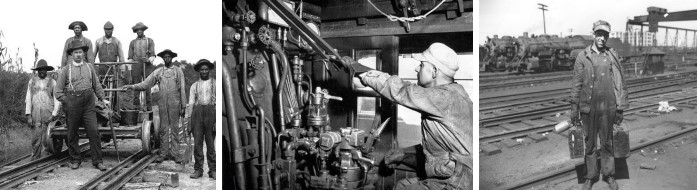
Railroad workers formed one of the largest and most influential occupational groups in North America from the mid-19th century through the early 20th century. They built, operated, and maintained the rail networks that powered industrial growth, migration, and commerce. Because railroads touched nearly every town, railroad employment generated a wide paper trail across company records, unions, government oversight, courts, and newspapers.
This occupation was not monolithic. “Railroad worker” describes a system of interdependent jobs, ranging from skilled locomotive crews to yard laborers and maintenance gangs—each producing different records and risks.
How the Job Was Described
Railroad employment was typically identified by specific role, not by the generic phrase “railroad worker.” Records often name the function first and the employer second.
Common role titles include:
engineer, fireman, conductor, brakeman, switchman, yardman, section hand, trackman, signalman, dispatcher, roundhouse worker.
Titles could change with seniority, transfers, or promotions—creating a timeline that helps track career progression.
Duties & Daily Work
Daily responsibilities depended on assignment:
- Train crews operated locomotives, managed speed, braking, and schedules, and ensured passenger and freight safety.
- Yard crews assembled and disassembled trains, handled switching operations, and managed freight flow.
- Maintenance crews repaired track, bridges, signals, and right-of-way.
- Support roles handled dispatching, scheduling, and mechanical repair.
Shift work, night duty, and constant travel were common, especially for engineers and conductors. These conditions explain why railroad workers appear so frequently in accident, court, and labor records.
Tools, Equipment & Work Environment
Railroad work required close interaction with heavy machinery:
- Steam locomotives and tenders
- Couplers, air brakes, switches
- Lanterns, flags, and timetables
- Track tools and handcars
Because tools were often involved in injuries or fatalities, they appear prominently in accident reports, inquests, and lawsuits.
Organizations, Unions & Professional Life
Railroad workers were among the earliest and most organized industrial labor groups. Membership mattered—not just socially, but legally and financially.
Prominent organizations included:
- Brotherhood of Locomotive Engineers
- Brotherhood of Railroad Trainmen
- Order of Railway Conductors
- Railroad relief and benefit associations
These groups generated membership rolls, meeting notices, strike documentation, pension files, and death benefit records—often naming spouses and beneficiaries.
Records Created by Railroad Employment
Railroad work produced a diverse and unusually rich record set, including:
- Company employment files and seniority lists
- Union membership and benefit records
- Accident and injury reports
- Coroner’s inquests and court proceedings
- Government regulatory investigations
- Pension and retirement documentation
- Trade journals and railroad employee magazines
Researchers should expect to find evidence scattered across multiple repositories, not confined to a single archive.
Newspapers & Periodicals
While not the centerpiece of research, newspapers frequently document railroad workers because their work was public and hazardous.
Railroad workers appear in:
- Accident and injury coverage
- Labor disputes and strikes
- Promotions, transfers, and commendations
- Obituaries emphasizing years of service
- Timetable changes and route announcements
These articles often provide context and narrative absent from formal records.
Risks, Accidents & Legal Exposure
Railroad employment carried significant danger. Common incidents included:
- Crushing injuries between railcars
- Falls from moving trains
- Boiler explosions and derailments
- Signal or switch failures
Fatal incidents often triggered multi-stage documentation: news reports, inquests, court cases, and union benefit claims—making this occupation especially traceable when tragedy occurred.
Industry Terminology (Selected)
- Right-of-way – Land reserved for railroad use
- Deadhead – Traveling without operating a train
- Section gang – Track maintenance crew
- Roundhouse – Locomotive service building
- Hotbox – Overheated wheel bearing
Such terms frequently appear without explanation in records and newspapers.
A Representative Figure: Casey Jones
The career of Casey Jones illustrates why railroad workers loom large in historical sources. His fatal 1900 wreck, heroic reputation, and rapid memorialization demonstrate how railroad accidents could elevate workers into public memory—while also generating extensive documentation across newspapers, company files, and cultural records.
Most railroad workers were not famous, but their working lives followed similar patterns of risk, mobility, and documentation.
Why Railroad Workers Matter to Genealogical Research
Few occupations intersect with as many record types as railroad employment. Understanding how railroad workers lived and worked allows researchers to:
- Predict where records are likely to exist
- Interpret job titles accurately
- Follow career movement across towns and states
- Recognize indirect clues when names are missing
If you’d like this information in a clean, printable, and well-organized reference format, this topic is also included in the Quicksheet Vault. The Vault is designed for researchers who prefer working tools they can save, print, and reuse—whether that means building a personal binder of key resources or keeping reliable references close at hand. You can learn more about the Quicksheet Vault HERE