Background
Historical Occupation Profiles explain what ancestors actually did for a living and how those occupations shaped the records genealogists rely on today.
Occupation Overview
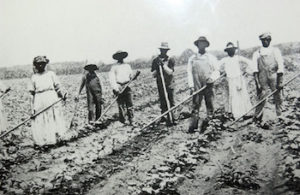
Sharecroppers were agricultural workers who farmed land owned by others in exchange for a portion of the crops produced. This system became especially widespread in the United States after the Civil War, particularly in the South, where it replaced many aspects of the plantation economy.
Unlike tenant farmers who often paid fixed rent, sharecroppers typically worked under agreements where the landowner received a share—often one-half—of the crop. Sharecroppers frequently depended on landowners or local merchants for tools, seed, and supplies.
Sharecropping was often characterized by economic dependency and limited opportunity for advancement.
How the Job Was Described
Historical records may list:
- Sharecropper
- Cropper
- Farm laborer (in some contexts)
- Tenant (in some records, though not always accurate)
- Farmer (without ownership distinction)
In many census records, the distinction between sharecropper and tenant farmer is not clearly stated. Additional records such as agricultural schedules or local accounts may help clarify the arrangement.
Duties & Daily Work
- Sharecroppers performed full agricultural responsibilities, including:
- Planting and cultivating crops
- Harvesting and processing produce
- Maintaining fields and fences
- Caring for livestock
- Transporting crops to market or storage
- Working under supervision or agreements with landowners
Sharecroppers often worked with family members, with spouses and children contributing significantly to farm labor.
Daily life was tied closely to seasonal cycles and crop demands.
Tools, Equipment & Work Environment
Sharecroppers relied on tools and equipment such as:
- Plows and hand tools
- Mules or horses for field work
- Wagons and carts
- Basic farming implements
- Cabins or housing provided by landowners
In many cases, tools and equipment were supplied by landowners or purchased on credit through local merchants.
Living and working conditions were often modest and dependent on the terms of the sharecropping agreement.
Employment Structure & Economic Arrangements
Sharecropping typically operated under agreements that included:
- Division of crops between landowner and worker
- Credit systems for seed, tools, and supplies
- Settlement of debts after harvest
- Annual or seasonal contracts
- Dependence on local merchants for goods
Sharecroppers often entered cycles of debt due to credit arrangements, making it difficult to accumulate savings or acquire land.
Records Created by Sharecropping
Sharecroppers may appear in:
- Population census records
- Agricultural census schedules
- Plantation or farm account books
- Credit ledgers maintained by merchants
- Labor agreements or contracts (when preserved)
- Court records involving debt or disputes
- Local tax or agricultural reports
Documentation may be indirect, especially where formal contracts were not preserved.
A Note on Historical Context
Sharecropping developed as a dominant agricultural system in the post–Civil War South. Many formerly enslaved individuals entered sharecropping arrangements, as did poor white farmers without access to land.
The system shaped rural economies for decades and influenced patterns of poverty, migration, and land use.
Over time, economic pressures and mechanization contributed to the decline of sharecropping, particularly in the early to mid-twentieth century.
Understanding sharecropping is essential for interpreting rural life in many regions during this period.
Newspapers & Periodicals
Sharecroppers appear in newspapers through:
- Agricultural reports and crop yields
- Labor disputes or conflicts
- Debt-related legal notices
- Sheriff’s sales or property seizures
- Regional economic news
Local newspapers may provide insight into crop conditions and economic challenges affecting sharecropping communities.
Risks, Financial Pressures & Legal Exposure
Sharecroppers faced significant challenges, including:
- Debt accumulation through credit systems
- Crop failures due to weather or pests
- Unfavorable contract terms
- Economic dependence on landowners and merchants
- Limited ability to accumulate wealth or property
Legal disputes over debt or crop shares sometimes resulted in court cases and public notices.
Industry Terminology (Selected)
- Sharecropping – System where crops are shared between worker and landowner
- Crop lien – Claim on future crops used as security for credit
- Furnishing merchant – Supplier providing goods on credit
- Tenant – Farmer renting land (not always equivalent to sharecropper)
- Settlement – Final accounting of crops and debts
These terms frequently appear in agricultural records, court documents, and local accounts.
Selected Free Research Starting Points
Researchers may find useful background materials and contextual resources through:
- Library of Congress collections related to agriculture and rural life
- National Archives agricultural census records and Reconstruction-era documentation
- State archives preserving agricultural and economic records
- University collections focusing on Southern and rural history
- Internet Archive and HathiTrust collections of agricultural reports and economic studies
Availability varies by region and era, but these sources provide valuable context for understanding sharecropping systems.
Why Sharecroppers Matter to Genealogical Research
Sharecroppers represent a significant portion of the rural population in certain regions and time periods. Understanding sharecropping arrangements helps genealogists interpret economic conditions, migration patterns, and the limited availability of land ownership records for many farming families.
If you’d like this information in a clean, printable, and well-organized reference format, this topic is also included in the Quicksheet Vault. The Vault is designed for researchers who prefer working tools they can save, print, and reuse — whether that means building a personal binder of key resources or keeping reliable references close at hand. You can learn more about the Quicksheet Vault HERE