Background
Historical Occupation Profiles explain what ancestors actually did for a living and how those occupations shaped the records genealogists rely on today.
Occupation Overview
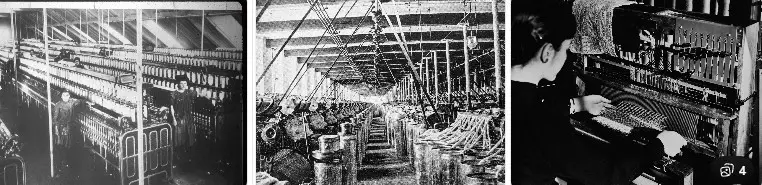
Textile mill workers spun, wove, dyed, and finished cloth in factories that became the backbone of early industrial America. From the early nineteenth century through the early twentieth century, textile mills dominated parts of New England, the Mid-Atlantic, and later the South.
Unlike mining or lumbering, textile work was typically urban or town-centered and often involved entire families. Women and children formed a significant portion of the workforce in many regions, making textile mills central to understanding family labor patterns and community life.
How the Job Was Described
Records often identify textile workers by specific task or machine, rather than by the general phrase “mill worker.”
Common descriptions include:
- spinner
- weaver
- loom operator
- carder
- bobbin winder
- doffer
- mill hand
- overseer
In census records, “factory operative” or “operative” may indicate mill work, especially in textile regions.
Duties & Daily Work
Textile production involved a sequence of specialized tasks:
- Spinners converted raw cotton or wool into thread.
- Weavers operated looms to create fabric.
- Carders prepared fibers for spinning.
- Doffers (often children) replaced full bobbins with empty ones.
- Overseers supervised production floors.
Mill work was structured, repetitive, and timed to machinery. Workers often labored long hours in noisy, lint-filled environments. Entire households might be employed in the same mill, which can explain multiple family members sharing identical occupational descriptions.
Tools, Machinery & Work Environment
Textile mills relied on increasingly mechanized equipment:
- Spinning frames
- Power looms
- Carding machines
- Dye vats and finishing machinery
Workspaces were tightly packed with machines, creating risks from moving parts, airborne fibers, and fire hazards.
Community, Company & Working Life
Textile mills often shaped entire towns. In some regions, mill owners built:
- Company housing
- Boardinghouses for single women
- Company stores
- Schools and churches
This employer-centered community structure can produce records beyond payroll lists, including housing rosters, school registers, and church membership tied to mill populations.
Labor organization also emerged over time, especially as working conditions and wages became contested issues.
Records Created by Textile Employment
Textile work generated records across multiple layers:
- Mill payroll and employment registers
- Boardinghouse or company housing records
- Factory inspection and labor reports
- Child labor documentation
- Strike and union records
- Court cases involving workplace injury
State labor bureaus and factory inspectors often published reports naming mills, owners, and sometimes workers.
A Note on Historical Context
Textile mills were central to early American industrialization and immigration. In New England, young women known as “mill girls” formed one of the first large-scale female industrial workforces. Later, immigrant families from Ireland, Italy, French Canada, Eastern Europe, and the American South became mill laborers.
Understanding this context helps explain clustered immigration patterns, dense urban neighborhoods, and repeated employment within the same industry across generations.
Newspapers & Periodicals
Textile workers appear in newspapers through:
- Strike coverage and labor disputes
- Mill openings and expansions
- Fire and machinery accidents
- Social notices tied to mill communities
- Obituaries noting long service at a particular mill
Because mills were often the economic center of a town, their workers were frequently mentioned in local reporting.
Risks, Accidents & Legal Exposure
Although less dramatic than mining accidents, textile work carried serious risks:
- Machinery entanglement injuries
- Respiratory illness from fiber dust
- Fire in mill buildings
- Long-term health effects
Injuries and disputes often led to legal cases, labor activism, and regulatory oversight—producing additional documentation.
Industry Terminology (Selected)
- Doffer – Worker who removed and replaced full bobbins
- Carding – Process of preparing fibers for spinning
- Warp & weft – Threads woven to create fabric
- Operative – Factory worker
- Mill village – Community built around a textile factory
These terms frequently appear in census entries, factory reports, and local newspapers.
Selected Free Research Starting Points
Researchers may find background materials and, in some cases, occupational records through:
- Library of Congress: photographs, industrial surveys, labor reports
- National Archives: federal labor investigations and industrial records
- State archives & university projects: mill employment collections, factory inspection reports
- Nonprofit and scholarly sites focusing on labor and industrial history
- Internet Archive and HathiTrust: digitized mill reports, labor publications, and trade journals
Availability varies by region and era, but these sources provide valuable context and potential record leads.
Why Textile Mill Workers Matter to Genealogical Research
Textile mill work shaped family structure, migration, and community development in industrial regions. Recognizing mill-related occupational terms helps genealogists interpret census records, explain clustered employment within families, and locate overlooked records tied to factories and mill villages.
If you’d like this information in a clean, printable, and well-organized reference format, this topic is also included in the Quicksheet Vault. The Vault is designed for researchers who prefer working tools they can save, print, and reuse — whether that means building a personal binder of key resources or keeping reliable references close at hand. You can learn more about the Quicksheet Vault HERE