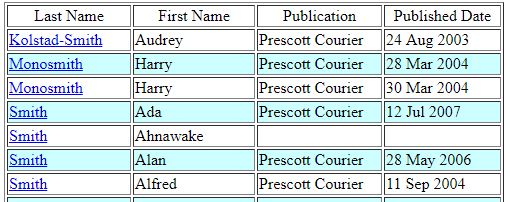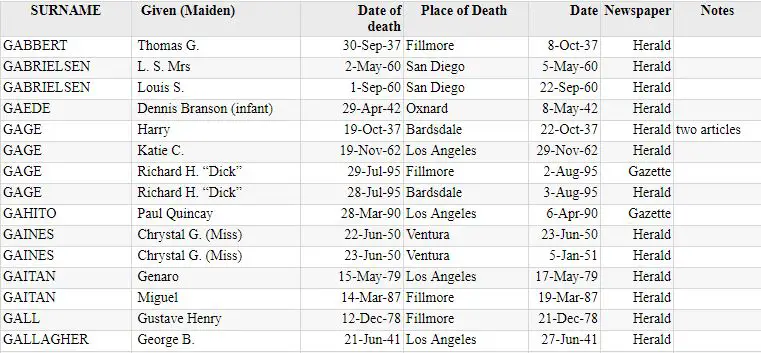
An obituary doesn’t have to be online for you to find it. For decades, librarians, genealogical societies, historical societies, and volunteers have read local newspapers and created obituary indexes pointing researchers to notices buried in microfilm and bound newspaper volumes. A good obituary index can give you the two pieces of information you really need: which newspaper published the obituary and when it appeared.
Introduction
An Obituary Index is a finding aid created to identify obituaries, death notices, and sometimes other death-related articles published in newspapers.
Many were painstakingly created long before newspapers were searchable online. Librarians and volunteers read newspapers issue by issue, recording information that would allow a future researcher to locate the original obituary.
They remain extraordinarily useful today.
Why?
Because millions of newspaper pages have never been digitized, and even digitized newspapers can be difficult to search because of poor Optical Character Recognition (OCR).
An obituary index can point directly to an obituary that an ordinary online newspaper search would never find.
What Should an Obituary Index Contain?
At its most useful, an obituary index may include:
- Name of the deceased
- Date of death
- Title of the newspaper
- Date the obituary was published
- Page number
- Column number
- Age
- Residence
- Maiden name
- Spouse’s name
- Other identifying information
But not every index contains all of these fields.
For research purposes, two pieces of information are especially important:
The title of the newspaper and the publication date of the obituary.
Those two facts tell you where to look.
A page number is extremely helpful, but it is frequently omitted. That is inconvenient, but not fatal. If you know the newspaper and publication date, you can browse that issue to find the obituary.
Actual library obituary indexes illustrate the point. The Abraham Lincoln Presidential Library’s index identifies the newspaper source and publication date, with many entries also providing page and column numbers. Johnson County Library describes its index as recording the name, death date, newspaper, publication date, and page number.
Death Index or Obituary Index? Read the Fine Print
Here is where things can become confusing.
Libraries, archives, genealogical societies, websites, and other institutions do not always use the terms Death Index and Obituary Index consistently.
You may encounter something called an Obituary Index that provides little more than:
John Smith — Died March 14, 1942
That may be useful as a death index, but it does not tell you where an obituary was published.
Conversely, a collection called a Death Index may actually have been compiled from newspapers and may lead directly to obituaries or death notices.
Never rely solely on the title of the collection.
Look at the fields in the index and read the collection description.
For the purposes of newspaper research, a true obituary index needs, at minimum, to identify the newspaper title containing the obituary. And to make that citation practically useful, the publication date is necessary.
Without those pieces, you may know when someone died—but you still don’t know where to find the obituary.
The distinction is real in practice. Pima County Public Library, for example, distinguishes the Social Security Death Index—which does not provide an obituary date—from its Arizona Daily Star index, which provides the date, page, and column where an obituary appeared.
The Death Date Is Not the Obituary Publication Date
This is an important distinction.
A person might die on:
June 3, 1937
but have an obituary published on:
June 5, 1937
A second obituary or funeral report might appear on:
June 7, 1937
An obituary index should make clear which date represents the death and which represents the newspaper publication.
Don’t assume they are the same.
In some cases, an obituary may not have appeared until days or even weeks after the death.
This is especially possible when someone died away from home, when news traveled slowly, or when a smaller weekly newspaper was involved.
Why Obituary Indexes Can Find What Newspaper Searches Miss
Digitized newspapers have transformed genealogy research, but searching them is far from perfect.
OCR can misread:
- Unusual typefaces
- Faded printing
- Damaged pages
- Narrow newspaper columns
- Decorative headings
- Names printed in poor-quality type
A surname such as Schmidt might be interpreted by OCR so badly that a name search never retrieves the obituary.
A human indexer reading the newspaper may have recognized the name perfectly.
That makes an old-fashioned obituary index an excellent alternative search method.
If the name search fails, search for an index to the newspaper.
Some Obituary Indexes Lead to Newspapers That Aren’t Online
This may be their greatest value.
Local libraries and genealogical societies often possess newspapers on microfilm that are not available through the major online newspaper websites.
Volunteers may have indexed those newspapers decades ago.
The obituary index therefore becomes a bridge between an online researcher and an offline newspaper collection.
For example, Monroe County Public Library instructs researchers to use its obituary index to obtain the newspaper title and publication date, then locate the corresponding newspaper on microfilm.
That is exactly what an obituary index should accomplish:
It tells you where the obituary is hiding.
Local Libraries Can Be Gold Mines
Local libraries deserve special attention when searching for obituary indexes.
Many have undertaken projects specifically to index their community newspapers.
These indexes may cover:
- A single newspaper
- Several local newspapers
- A particular county
- Several decades
- More than a century of local publications
Some were created by library staff. Others were projects of local genealogical or historical societies. Still others were built by individual volunteers over many years.
Jackson-Madison County Library, for example, describes an obituary index beginning in 1936 that was developed through years of work by a volunteer reading The Jackson Sun.
These locally created resources can be easy to overlook if your research begins and ends with the large genealogy websites.
An Index Is a Pointer, Not the Obituary
This distinction is essential.
Finding someone in an obituary index does not mean you have found the obituary.
You have found a citation or finding aid pointing toward it.
The next step is to locate the original newspaper issue.
That might mean:
- Opening a digitized newspaper
- Browsing a newspaper database
- Viewing microfilm at a library
- Contacting a library for a copy
- Requesting help from a genealogical society
- Using an interlibrary service
- Searching another repository holding the newspaper
Don’t copy the limited information from the index into your family history and stop.
Go get the obituary.
That is where the names, relationships, residences, occupations, organizations, funeral information, and other genealogical clues may be waiting.
Don’t Give Up Because There Is No Page Number
Page numbers are wonderful.
They can turn a 20-page newspaper search into a 30-second retrieval.
But many obituary indexes do not provide them.
Don’t dismiss an index because the page field is missing.
If you have:
Newspaper Title + Publication Date
you have enough information to locate the correct issue and browse it.
Look particularly in:
- Obituary columns
- Death notices
- Local news
- Society pages
- Funeral notices
- Community news columns
For a small weekly newspaper, browsing the entire issue may take only a few minutes.
Check the Coverage Before Assuming There Is No Obituary
An unsuccessful search of an obituary index does not prove that no obituary was published.
Every index has limits.
Ask:
- Which newspapers were indexed?
- What years are covered?
- Were all issues indexed?
- Were both obituaries and death notices included?
- Were news articles about deaths included?
- Is the indexing project complete?
The Abraham Lincoln Presidential Library explicitly warns that its index does not contain every obituary or death notice in every newspaper in its collection
So:
Not in the index does not mean not in the newspaper.
If you have reason to believe an obituary should exist, search or browse the newspaper itself.
Search for More Than One Obituary
Once an index identifies an obituary, don’t assume that was the only newspaper coverage.
The same death might produce:
- A death notice
- An obituary
- A funeral announcement
- A funeral report
- An In Memoriam notice
- A lodge or organizational memorial
- A news article about the death
The obituary index gives you a starting point.
Use the death date and publication date to search several days before and after the indexed notice.
Then consider searching other newspapers in the community and newspapers in places where close relatives lived.
One indexed obituary may lead to several additional newspaper discoveries.
Key Takeaways
- An Obituary Index is a finding aid that points researchers to newspaper obituaries and death notices.
- Many were created by libraries, genealogical societies, historical societies, and volunteers.
- The terminology Death Index and Obituary Index is not always used consistently.
- Do not assume something is an obituary index simply because the institution calls it one.
- For newspaper research, an obituary index should at minimum identify the newspaper title, and the publication date is necessary to locate the notice efficiently.
- A page number is extremely useful but is often unavailable.
- The death date and obituary publication date are different facts and should not be confused.
- Obituary indexes can overcome OCR failures in digitized newspapers.
- They may point to newspapers that have never been digitized and survive only on microfilm or in physical collections.
- Local libraries and genealogical societies can have exceptional obituary indexes that are unavailable on major genealogy websites.
- An entry in an obituary index is not the obituary itself. Use it to locate the original newspaper.
- Check an index’s newspaper, date, and content coverage before concluding that an obituary does not exist.
- Once you locate one obituary, search surrounding issues and other newspapers for additional death-related notices.
Examples