The Ancestor Hunt regularly adds and updates new collection links, as well as searches for and fixes broken links.
(This page's most recent update is February 2026)
Want to improve your newspaper research skills? Become an AcademyPro member of the Newspaper Research Academy at Academy
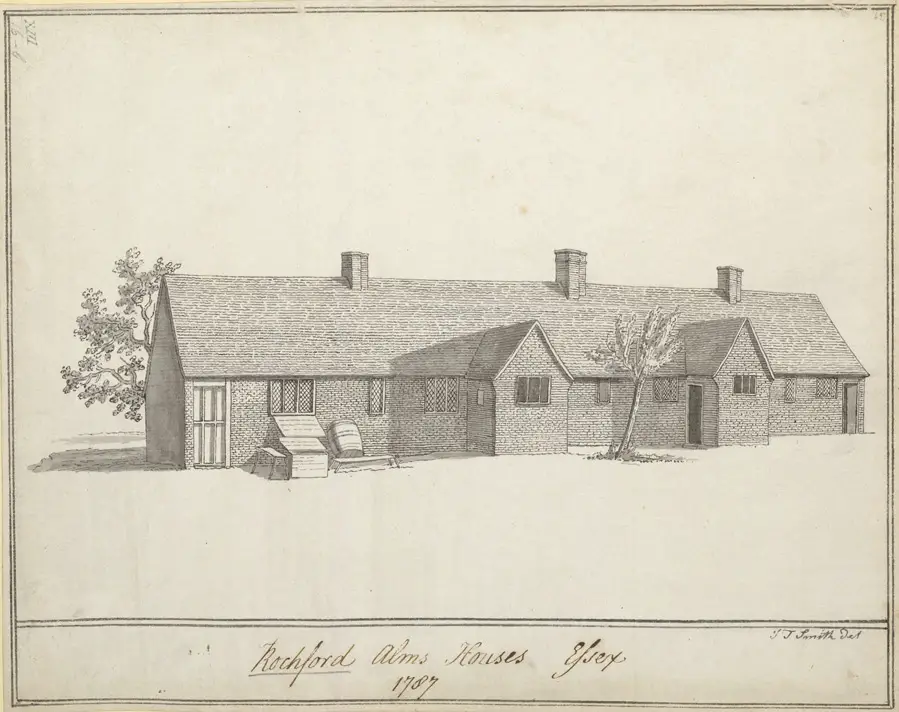
Almshouses, poorhouses, and county farms were local institutions created to provide relief to the poor, elderly, disabled, and otherwise dependent members of the community. Records from these facilities can reveal residence, health conditions, family relationships, financial status, and burial information. Terminology varied by state and time period, making it important to understand the language used in institutional and court records.
| Term | Meaning |
| Almshouse | Public institution supported by local government to house and care for indigent individuals. |
| Poorhouse | Common term for a local facility providing shelter and subsistence to the poor. |
| County Farm | County-operated poorhouse where residents often worked agricultural land. |
| Poor Farm | Alternate term for county farm. |
| House of Industry | Early term for a poorhouse emphasizing labor and reform. |
| Workhouse | Institution requiring labor, sometimes combined with penal functions. |
| House of Correction | Facility combining minor criminal confinement and poor relief. |
| Indoor Relief | Aid provided within an institution such as an almshouse. |
| Outdoor Relief | Financial or material aid given without requiring institutional residence. |
| Overseer of the Poor | Local official responsible for administering poor relief. |
| Keeper | Person in charge of an almshouse. |
| Superintendent | Administrative head of a poor institution. |
| Pauper | Individual receiving public assistance; frequently noted in census records. |
| Indigent | Person lacking financial resources. |
| Settlement (Legal Settlement) | Legal residence determining which locality was financially responsible for support. |
| Removal Order | Court order returning a pauper to their place of legal settlement. |
| Warning Out | Colonial-era practice of expelling individuals to avoid financial responsibility. |
| Binding Out | Placing poor children into apprenticeship or service. |
| Indenture | Legal contract placing a child in service or apprenticeship. |
| Bastardy Bond | Financial bond requiring the alleged father of an illegitimate child to provide support. |
| Illegitimate / Base-born | Child born outside of marriage; often appears in poor relief records. |
| Tramp Ward | Separate housing area for transient individuals. |
| Transient | Person receiving short-term institutional relief. |
| Vagrant | Person without visible means of support, often temporarily housed. |
| Inmate | Resident of a poorhouse (common institutional term). |
| Infirmary Ward | Section of a poorhouse designated for the sick or elderly. |
| County Infirmary | Later term for a county-operated medical poor relief facility. |
| Relief Roll | Official list of individuals receiving aid. |
| Board of Charities | Oversight body supervising welfare institutions. |
| County Commissioners | Officials overseeing county finances, including poor relief budgets. |
| Admitted | Formally entered into institutional residence. |
| Committed | Legally placed in institutional care by court order. |
| Discharged | Released from institutional residence. |
| Paroled | Temporarily released under supervision. |
| Potter’s Field | Burial ground for indigent individuals. |
| Alms | Charity or financial assistance given to the poor. |
| Dependent | Individual reliant on public support. |
| Destitute | Completely lacking means of support. |
| Public Charge | Person likely to become dependent on public assistance. |
If you’d like this information in a clean, printable, and well-organized reference format, this topic is also included in the Quicksheet Vault. The Vault is designed for researchers who prefer working tools they can save, print, and reuse — whether that means building a personal binder of key resources or keeping reliable references close at hand. You can learn more about the Quicksheet Vault HERE