Want to know who showed up when your ancestor died? A funeral guest register can preserve something few other death records can: the names of the people who came to pay their respects. Relatives, friends, neighbors, coworkers, business associates, and members of churches and organizations may all appear—creating a remarkable snapshot of the deceased person’s family and social network. The problem? These records are rarely digitized and often survive only because someone in the family saved them.
Introduction
A funeral guest register records the people who attended a funeral, memorial service, visitation, or viewing.
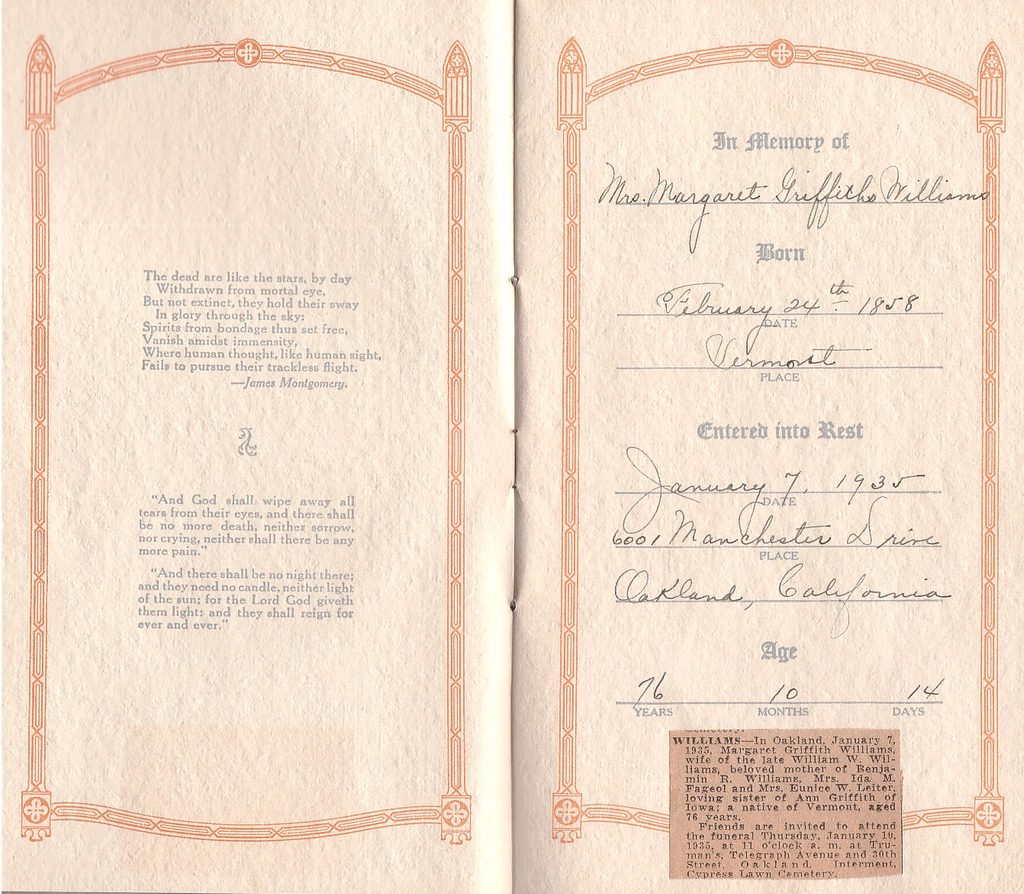
These registers were often part of a larger funeral or memorial book provided by the funeral home. The booklet might contain information about the deceased and funeral service, followed by pages where visitors signed their names.
For genealogists, funeral guest registers can be extraordinary resources.
A death certificate records facts about a death. An obituary identifies selected relatives and summarizes a life.
A funeral guest register can provide something quite different:
It can identify the people who actually appeared when that person died.
Those names can represent family members, friends, neighbors, coworkers, former neighbors, church members, business associates, and others whose connection to the deceased may not appear in any conventional genealogy record.
Unfortunately, funeral guest registers are also difficult to find. They were generally family possessions rather than public records, and many have never been digitized or indexed.
What Might a Funeral Guest Register Contain?
The contents vary considerably.
A funeral or memorial booklet containing a guest register may include:
- Full name of the deceased
- Birth and death dates
- Funeral or memorial service date
- Funeral home
- Church or other service location
- Name of the officiating clergy member
- Cemetery or place of burial
- Names of pallbearers
- Hymns, prayers, or readings
- Biographical information about the deceased
- Photographs
- Pages containing signatures of attendees
Some are elaborate memorial books. Others are simple registers consisting primarily of pages for signatures.
The handwritten names may ultimately be the most genealogically valuable part.
The People Who Attended Are the Treasure
Think about who attends a funeral.
Children and grandchildren come.
Siblings and cousins come.
Neighbors come.
Coworkers come.
Old friends come.
Members of churches, lodges, veterans’ organizations, clubs, and community groups come.
People who knew the deceased decades earlier may come.
That makes the guest register something unusual in genealogy: a record of a person’s social network gathered at one particular moment in time.
Not everyone who signed the book was related to the deceased. In fact, many probably were not.
But that is precisely what can make the register so useful.
Genealogy research often depends on understanding the people surrounding an ancestor, not merely the ancestor’s immediate family.
Treat the Names Like Witnesses
A useful way to approach a funeral guest register is to think of the people who signed it as witnesses to the deceased person’s life.
They knew the person somehow.
The research question becomes:
Who are these people, and why were they there?
Some names will be immediately recognizable.
Others may be completely unfamiliar.
Those unfamiliar names deserve attention.
A surname that appears several times might represent an unknown branch of the family. A former neighbor could connect the deceased to an earlier residence. A coworker might help identify an employer. Someone from another town might reveal a family or community connection you did not know existed.
The register does not usually explain those relationships.
Your job is to discover them.
Start with the Names You Recognize
Before investigating unfamiliar people, identify the attendees you already know.
Mark known:
- Children
- Grandchildren
- Siblings
- Nieces and nephews
- Cousins
- In-laws
- Close family friends
Doing this establishes a framework for interpreting the remaining names.
Then look for clusters.
Several people with the same surname may belong to one family. Several attendees from the same town may represent relatives or friends connected with an earlier residence.
One unfamiliar name by itself may mean little.
Five unfamiliar people who can all be connected to the same family, workplace, church, or neighborhood may be a significant clue.
Married Women Can Create Valuable Clues
Funeral registers can be particularly useful for identifying women whose surnames changed through marriage.
Suppose you recognize a deceased person’s niece in an earlier census but lose track of her after she marries.
A woman with an unfamiliar married surname appearing in the funeral register might provide the clue needed to find her again.
The register itself may not identify her relationship to the deceased. But combining her name with age, location, census records, marriage records, obituaries, and other sources may establish the connection.
The same principle applies to sisters, daughters, cousins, and other female relatives.
Coworkers and Business Associates Matter Too
Not every valuable name belongs on the family tree.
If your ancestor worked for the same company for 30 years, coworkers attending the funeral might help document that part of the person’s life.
Search unfamiliar names in city directories and census records.
Do several people work for the same employer?
Do they live near one another?
Are several associated with the same occupation?
Those patterns may help identify your ancestor’s workplace or explain relationships mentioned elsewhere.
A funeral register can therefore help reconstruct not only a family network but also a work and community network.
Church and Organization Connections May Appear
Funeral attendance can also reveal associations that are difficult to identify from ordinary genealogical records.
Several attendees may belong to the same:
- Church or congregation
- Fraternal organization
- Veterans’ group
- Labor or professional organization
- Social club
- Community organization
The memorial booklet itself may provide additional clues through the officiating clergy member, funeral location, hymns, organizational emblems, or lists of honorary pallbearers.
These clues can lead to church registers, organizational membership records, newsletters, newspapers, and other sources.
Compare the Guest Register with the Obituary
A funeral guest register and an obituary make an especially powerful combination.
The obituary may identify known relatives and provide residences.
The guest register then gives you a much larger collection of names.
Start by matching people in the obituary with signatures in the register.
Once known relatives have been identified, investigate the remaining names.
You may discover relatives omitted from the obituary, married surnames you did not know, distant cousins, or people connected with an earlier part of the deceased person’s life.
The obituary tells you who the family chose to identify. The guest register may show you who actually came.
Those are two very different kinds of evidence.
Look at the Order of the Signatures
Don’t automatically treat the register as an alphabetical list of names.
People generally signed as they arrived.
That means neighboring signatures may occasionally be meaningful.
A husband and wife might sign consecutively. Several members of one family may appear together. People who traveled together from another community might sign near one another.
This is not proof that adjacent names are related or even connected. Funeral crowds and signing practices can be messy.
But when an unfamiliar person appears immediately among several known relatives, that positioning can provide another reason to investigate the name.
The order of the signatures can be a clue—but never assume it establishes a relationship.
Addresses Can Make the Register Even More Valuable
Some guest registers ask attendees to provide an address along with their name.
When they do, the research value increases dramatically.
An address can help distinguish between two people with the same name and can make an unfamiliar attendee much easier to identify in census records, city directories, newspapers, and other sources.
It may also reveal that several attendees came from the same distant community.
That could indicate an earlier family residence or an extended branch of the family.
Always capture the address exactly as written before beginning your investigation.
Why These Records Are So Difficult to Find
Funeral guest registers were generally not government records.
They belonged to the family.
After the funeral, the memorial book might be placed in a drawer, stored with family papers, or passed to a child or grandchild.
Decades later, it might still be sitting in someone’s attic.
That means many funeral guest registers have never been:
- Digitized
- Indexed
- Cataloged
- Published
- Placed online
Others have undoubtedly been discarded.
This scarcity makes surviving registers especially valuable.
Where Might You Find a Funeral Guest Register?
Because these were typically family-held documents, begin close to home.
Ask relatives whether anyone has:
- Funeral books
- Memorial books
- Funeral programs
- Sympathy cards
- Obituary clippings
- Family Bibles
- Boxes of papers belonging to parents or grandparents
Look through inherited scrapbooks, photograph boxes, desk drawers, and collections of family memorabilia.
Funeral guest registers can also occasionally appear in:
- Funeral home collections
- Libraries
- Historical societies
- Genealogical societies
- Local archives
- University manuscript collections
- Donated family-paper collections
- Online auction and resale sites
- Digitized family collections
If you know which funeral home handled the arrangements, investigate whether its historical records survive.
But recognize that the family’s copy of the register may be the only copy that ever existed.
Preserve and Digitize the Entire Register
If you are fortunate enough to have a family funeral guest register, don’t photograph only the page containing the deceased person’s information.
Digitize the entire booklet.
Capture:
- Front and back covers
- Biographical pages
- Funeral service information
- Pallbearers
- Cemetery information
- Every page of signatures
- Blank pages containing handwritten notes
- Loose items stored inside the booklet
Preserve the pages in their original order.
A name that seems meaningless today may become important several years from now after another family connection is discovered.
And because these records are so often privately held, consider sharing digital copies with other family members or an appropriate genealogy repository.
You may be preserving a record that exists nowhere else.
Don’t Treat Attendance as Proof of Relationship
A funeral guest register can generate wonderful clues, but it requires careful interpretation.
A person attended the funeral.
That fact alone does not tell you why.
The attendee could have been a relative, neighbor, coworker, friend, business associate, church member—or simply someone who knew the family.
Use other records to establish the relationship.
Search census records, city directories, newspapers, marriage records, obituaries, church records, employment records, and other sources.
The guest register gives you the name.
The genealogical detective work begins when you ask why that name is there.
Key Takeaways
- Funeral guest registers record people who attended a funeral, visitation, viewing, or memorial service.
- They were often included in memorial books provided by funeral homes and retained by families.
- The attendees can represent an extraordinary snapshot of the deceased person’s family and social network.
- Known attendees can help you interpret unfamiliar names.
- Unfamiliar surnames may reveal previously unidentified relatives, including women whose surnames changed through marriage.
- Coworkers, neighbors, church members, and organizational associates can provide clues about other parts of the deceased person’s life.
- Compare the register with the obituary to separate known relatives from people requiring further investigation.
- Signature order and addresses can provide additional clues but should not be treated as proof of relationships.
- Funeral guest registers are often difficult to find because they were private family possessions rather than public records.
- If you own one, digitize the entire register and preserve it carefully.
- Every unfamiliar name represents a simple research question: Who was this person, and why did they attend?
Examples