The Ancestor Hunt regularly adds and updates new collection links, as well as searches for and fixes broken links.
(This page's most recent update is May 2026)
Practical solutions for real genealogy research problems. Explore the new Field Guides
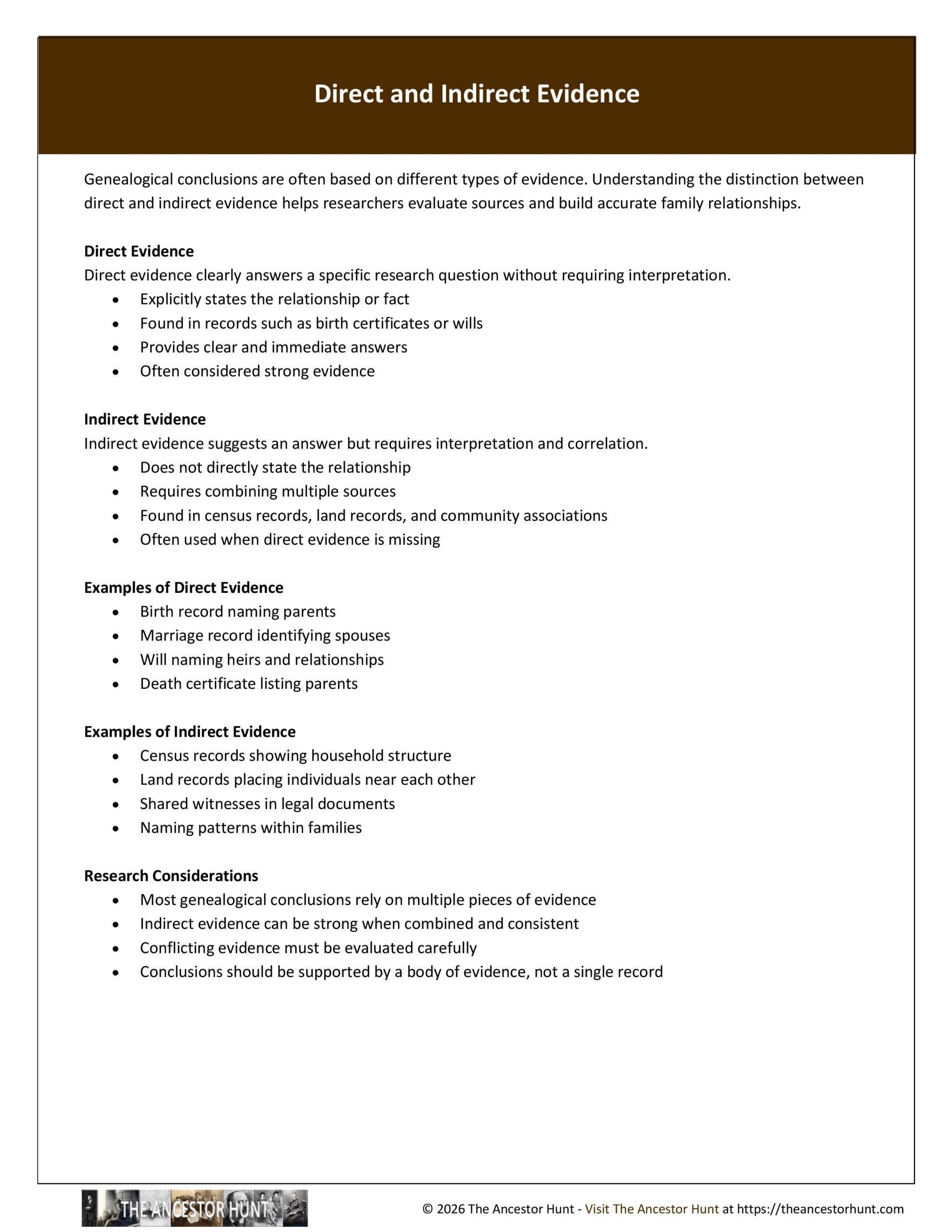
Genealogical conclusions are often based on different types of evidence. Understanding the distinction between direct and indirect evidence helps researchers evaluate sources and build accurate family relationships.
Direct Evidence
Direct evidence clearly answers a specific research question without requiring interpretation.
- Explicitly states the relationship or fact
- Found in records such as birth certificates or wills
- Provides clear and immediate answers
- Often considered strong evidence
Indirect Evidence
Indirect evidence suggests an answer but requires interpretation and correlation.
- Does not directly state the relationship
- Requires combining multiple sources
- Found in census records, land records, and community associations
- Often used when direct evidence is missing
Examples of Direct Evidence
- Birth record naming parents
- Marriage record identifying spouses
- Will naming heirs and relationships
- Death certificate listing parents
Examples of Indirect Evidence
- Census records showing household structure
- Land records placing individuals near each other
- Shared witnesses in legal documents
- Naming patterns within families
Research Considerations
- Most genealogical conclusions rely on multiple pieces of evidence
- Indirect evidence can be strong when combined and consistent
- Conflicting evidence must be evaluated carefully
- Conclusions should be supported by a body of evidence, not a single record
Download the Quicksheet PDF
To obtain the Quicksheet PDF of this information, download it by clicking on the Download button below:
For all the previously published Quick Reference Guides, click on QuickSheets.
If you use Quicksheets often, the Quicksheet Vault puts 450+ of them in one organized place — clean, printable, and easy to reuse whenever you need them. Whether you keep digital references handy or build your own genealogy binder, the Vault makes research simpler. Learn more about the Quicksheet Vault HERE