The Ancestor Hunt regularly adds and updates new collection links, as well as searches for and fixes broken links.
(This page's most recent update is May 2026)
Practical solutions for real genealogy research problems. Explore the new Field Guides
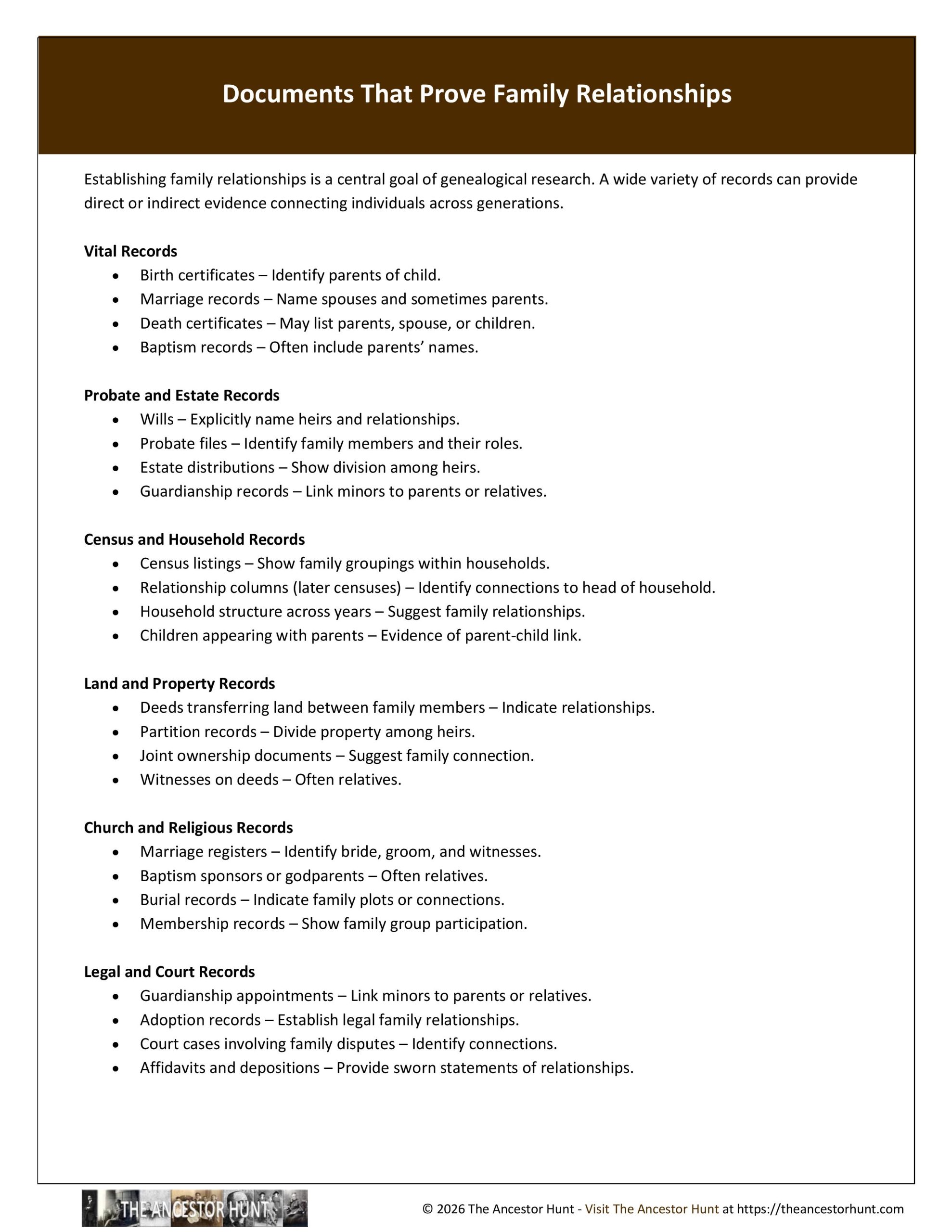
Establishing family relationships is a central goal of genealogical research. A wide variety of records can provide direct or indirect evidence connecting individuals across generations.
Vital Records
- Birth certificates – Identify parents of child.
- Marriage records – Name spouses and sometimes parents.
- Death certificates – May list parents, spouse, or children.
- Baptism records – Often include parents’ names.
Probate and Estate Records
- Wills – Explicitly name heirs and relationships.
- Probate files – Identify family members and their roles.
- Estate distributions – Show division among heirs.
- Guardianship records – Link minors to parents or relatives.
Census and Household Records
- Census listings – Show family groupings within households.
- Relationship columns (later censuses) – Identify connections to head of household.
- Household structure across years – Suggest family relationships.
- Children appearing with parents – Evidence of parent-child link.
Land and Property Records
- Deeds transferring land between family members – Indicate relationships.
- Partition records – Divide property among heirs.
- Joint ownership documents – Suggest family connection.
- Witnesses on deeds – Often relatives.
Church and Religious Records
- Marriage registers – Identify bride, groom, and witnesses.
- Baptism sponsors or godparents – Often relatives.
- Burial records – Indicate family plots or connections.
- Membership records – Show family group participation.
Legal and Court Records
- Guardianship appointments – Link minors to parents or relatives.
- Adoption records – Establish legal family relationships.
- Court cases involving family disputes – Identify connections.
- Affidavits and depositions – Provide sworn statements of relationships.
Other Supporting Records
- Family Bible entries – Record births, marriages, and deaths.
- Obituaries – Summarize family relationships.
- Military pension files – Identify spouses, children, and dependents.
- Newspaper articles – Mention family connections and events.
Download the Quicksheet PDF
To obtain the Quicksheet PDF of this information, download it by clicking on the Download button below:
For all the previously published Quick Reference Guides, click on QuickSheets.
If you use Quicksheets often, the Quicksheet Vault puts 450+ of them in one organized place — clean, printable, and easy to reuse whenever you need them. Whether you keep digital references handy or build your own genealogy binder, the Vault makes research simpler. Learn more about the Quicksheet Vault HERE