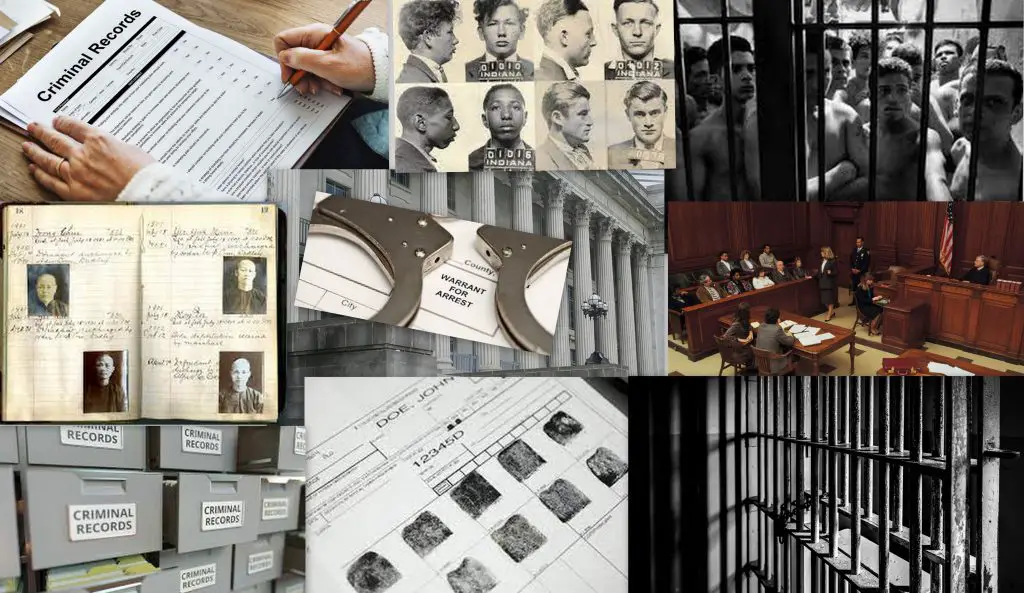
Another type of genealogy record that provides tremendous value is criminal records. Some of our ancestors, unfortunately, got in trouble with the law. And records were kept from arrests through court cases to prison documents. Now, more and more of these records are being digitized or transcribed and are being made available online.
Types of Records
- Criminal court proceedings
- Police reports
- Prison and jail admission registers
- Arrest records
- Mug books
- Pardon and discharge information
- Hospital record books
- Workhouse records
- Census records
- Burials in prison cemeteries
Types of Information
- Name
- Age
- Birth date
- Height
- Weight
- Complexion
- Eye color
- Hair color
- Nationality
- Occupation
- Education
- Habits (alcohol use)
- Relations (parents living)
- Date incarcerated
- Court where charged
- Recommitments
- How and when discharged
To discover Free Online Criminal Records Collections, listed by state, click on the Criminal Records page on this website.
2 replies on “Genealogy Information In Criminal Records”
Your rundown of the various criminal‑record categories, arrest logs, mug books, and prison admission registers, highlights why these files are such a goldmine for family historians, especially now that digitization is turning dusty ledgers into searchable PDFs. For anyone tracing ancestors the practical steps and form templates on https://philadelphiacountycourts.org/philadelphia-criminal-records/ which demystify the request process and ensure the right docket is consulted. Combining that localized guidance with the broader state‑wide indexes you linked creates a truly comprehensive research strategy.
Criminal records can offer valuable clues for genealogy research, especially when traditional family documents are missing. Historical police reports, arrest information, and court documents may reveal details about an ancestor’s activities, whereabouts, or involvement in past events. Researchers should compare these records with newspaper archives and other historical sources to avoid drawing conclusions from incomplete information. Exploring resources such as Philadelphia County Records can also provide access to police-related public information for local record research. Combining different sources often helps genealogists build a more accurate picture of their family history.