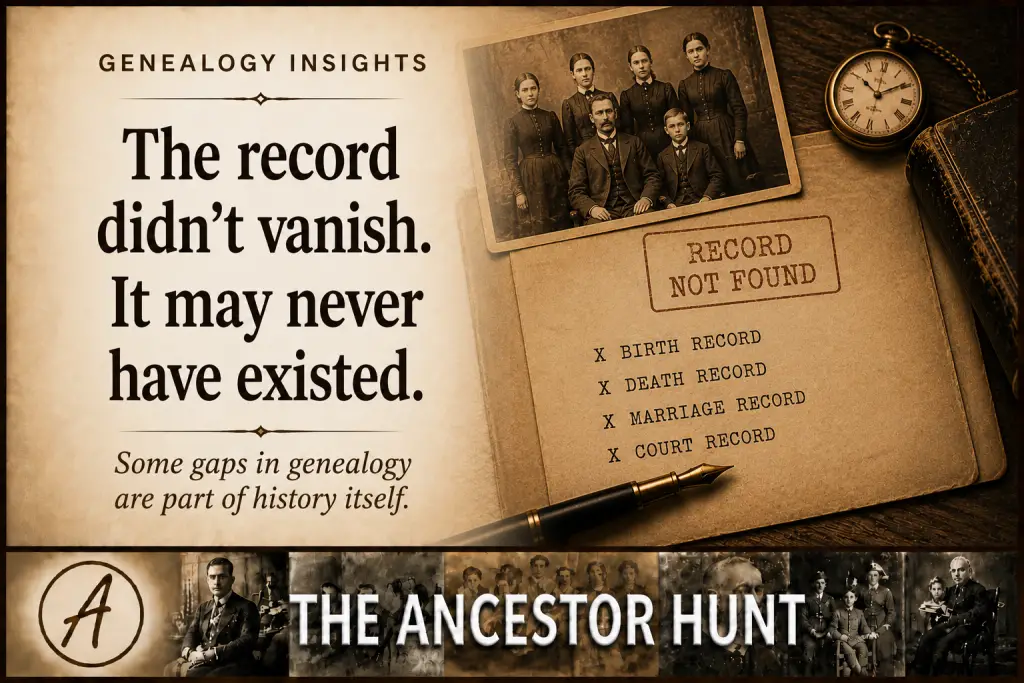
Not every missing record is waiting to be found. Some were never created, never preserved, or never survived long enough to reach us.
The Insight
One of the most frustrating experiences in genealogy is searching endlessly for a record that never appears. After checking databases, archives, indexes, and repositories, many researchers assume they simply have not looked in the right place yet.
Sometimes that is true.
Sometimes the record never existed at all.
Researchers often assume that every birth, death, marriage, land transaction, or court proceeding automatically generated a permanent record. In reality, recordkeeping varied dramatically across time and place. Many events occurred before registration laws existed, before compliance was enforced, or before local officials consistently documented them.
Understanding this possibility changes the way genealogists approach missing records and research dead ends.
Why It Matters
- Not every event generated an official record.
- Recordkeeping laws varied by state, county, and time period.
- Early records were often incomplete or inconsistently maintained.
- Some records were lost through fire, flood, neglect, or deterioration.
- Endless searching for a nonexistent record can waste valuable research time.
Recognizing that a record may never have existed allows researchers to redirect their efforts toward more productive sources.
What To Look For
When an expected record cannot be found, consider:
- Was recordkeeping required at that time?
- Were local officials consistently recording events?
- Have records from that period survived?
- Did the jurisdiction experience courthouse losses?
- Are there known gaps in the collection?
Historical context often explains why a document cannot be located.
Research Action
Instead of repeatedly searching for the same missing record, look for alternative sources that may provide similar information:
- Newspapers
- Church records
- Probate files
- Land records
- Tax lists
- City directories
- Family Bibles
- Cemetery records
- Military records
Indirect evidence frequently helps reconstruct the story when direct evidence is unavailable.
Key Takeaway
A missing record is not always a failed search. Sometimes the document was lost. Sometimes it was never created. Understanding the difference allows researchers to stop chasing a dead end and start looking for other ways to uncover the evidence they need.
The Genealogy Insights Field Guides
Discover all 30 Genealogy Insights in the Field Guides Collection