Background
Historical Occupation Profiles explain what ancestors actually did for a living and how those occupations shaped the records genealogists rely on today.
Occupation Overview
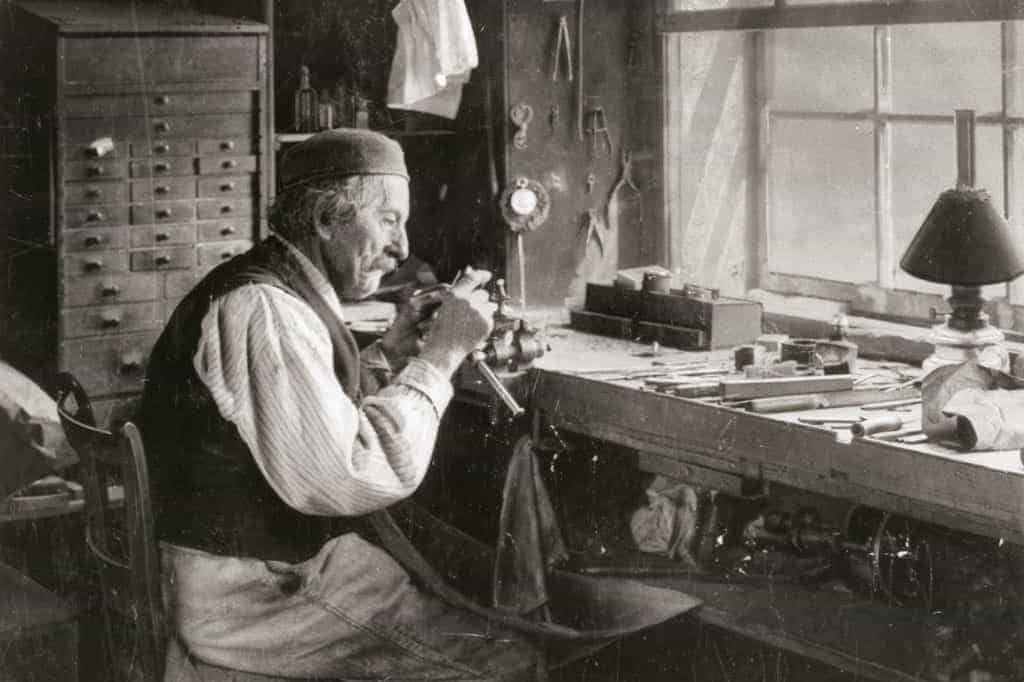
Jewelers and watchmakers crafted, repaired, and sold jewelry, watches, and small precision items. In the eighteenth, nineteenth, and early twentieth centuries, these trades required specialized skills and careful workmanship, often performed in small shops or workshops.
Jewelers created and repaired items such as rings, necklaces, and decorative pieces, while watchmakers focused on the assembly and repair of timepieces. In many communities, the two trades overlapped and were frequently practiced together.
How the Job Was Described
Historical records may list:
- Jeweler
- Watchmaker
- Goldsmith
- Silversmith
- Horologist
- Clockmaker
- Repairer (watch or jewelry context)
In some records, individuals may be listed under broader terms such as merchant or craftsman.
Duties & Daily Work
Jewelers and watchmakers performed tasks such as:
- Designing and creating jewelry
- Setting stones and working with precious metals
- Repairing watches and clocks
- Assembling small mechanical components
- Polishing and finishing items
- Selling goods to customers
Work required precision, patience, and attention to detail.
Tools, Equipment & Work Environment
These trades relied on tools such as:
- Fine hand tools and instruments
- Magnifying lenses
- Small lathes and mechanical tools
- Polishing equipment
- Workbenches and specialized lighting
Work environments were typically small shops or workshops, often located in commercial districts.
Apprenticeship & Trade Structure
Jewelers and watchmakers were typically trained through apprenticeship, progressing from:
- Apprentice
- Journeyman
- Master craftsman
- Shop owner or proprietor
Skills were often passed down through generations or learned within established workshops.
Records Created by Jewelry and Watchmaking Work
Jewelers and watchmakers may appear in:
- City directories
- Business advertisements
- Apprenticeship agreements
- Trade guild or association records
- Tax records
- Probate inventories listing tools and goods
Because they often operated businesses, they appear frequently in commercial records.
A Note on Historical Context
These trades were associated with skilled craftsmanship and often served middle- and upper-income customers. The growth of mass production in the late nineteenth and early twentieth centuries began to change how jewelry and watches were manufactured and sold.
Despite industrialization, skilled repair work remained essential, maintaining demand for trained craftsmen.
Newspapers & Periodicals
Jewelers and watchmakers appear in newspapers through:
- Business advertisements
- Shop openings and relocations
- Partnership announcements
- Theft or loss of valuables
- Obituaries referencing years in trade
Advertisements often highlight services such as repair and custom work.
Risks, Challenges & Working Conditions
These trades involved challenges such as:
- Eye strain from detailed work
- Physical strain from long hours at benches
- Economic dependence on customer demand
- Risk of theft of valuable materials
- Need for precision and accuracy
Working conditions were generally safer than heavy industry but required sustained concentration.
Industry Terminology (Selected)
- Horology – Study of timekeeping
- Setting – Placement of gemstones
- Movement – Internal mechanism of a watch
- Goldsmith – Worker shaping gold
- Silversmith – Worker shaping silver
These terms frequently appear in trade records and advertisements.
Selected Free Research Starting Points
Researchers may find useful background materials and contextual resources through:
- Library of Congress collections related to crafts and commerce
- National Archives records involving business and trade
- State archives preserving commercial and licensing records
- Local historical societies documenting small businesses
- Internet Archive and HathiTrust collections of jewelry and watchmaking manuals
Availability varies by region and era, but these sources provide valuable context for understanding these trades.
Why Jewelers & Watchmakers Matter to Genealogical Research
Jewelers and watchmakers were skilled craftsmen often operating independent businesses. Understanding their work helps genealogists interpret occupational skill levels, small business ownership, and community presence within commercial districts.
If you use Quicksheets often, the Quicksheet Vault puts 450+ of them in one organized place — clean, printable, and easy to reuse whenever you need them. Whether you keep digital references handy or build your own genealogy binder, the Vault makes research simpler. Learn more about the Quicksheet Vault HERE