Background
Historical Occupation Profiles explain what ancestors actually did for a living and how those occupations shaped the records genealogists rely on today.
Occupation Overview
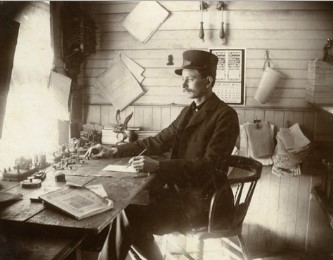
Telegraph operators transmitted and received messages using telegraph systems that revolutionized communication in the nineteenth and early twentieth centuries. Before the widespread use of telephones, the telegraph allowed information to travel rapidly over long distances, connecting cities, railroads, businesses, and government offices.
Telegraph operators were skilled workers who understood Morse code and operated specialized equipment. They were essential to industries such as railroads, journalism, and commerce, as well as to government and military communication systems.
How the Job Was Described
Historical records may list:
- Telegraph operator
- Telegrapher
- Railroad operator
- Station agent (combined role)
- Wire operator
- Clerk (telegraph office context)
In many railroad towns, telegraph operators were also listed as station agents, combining communication duties with administrative responsibilities.
Duties & Daily Work
Telegraph operators performed responsibilities such as:
- Sending and receiving messages using Morse code
- Transcribing incoming messages
- Maintaining telegraph equipment
- Relaying information between stations
- Recording and filing communications
- Assisting railroad operations by transmitting schedules and orders
Work required concentration, accuracy, and familiarity with coded communication systems.
Operators often worked in shifts, especially in busy telegraph offices or railroad stations.
Tools, Equipment & Work Environment
Telegraph work relied on equipment such as:
- Telegraph keys
- Sounders or receivers
- Wires and electrical connections
- Message forms and logs
- Office desks and communication stations
Work environments included railroad depots, telegraph offices, newspaper offices, and government buildings. Offices were often small but busy centers of communication activity.
Employment Structure & Industry Connections
Telegraph operators were commonly employed by:
- Railroad companies
- Telegraph companies
- Newspapers and news agencies
- Government offices
- Commercial businesses
Railroads were among the largest employers of telegraph operators, as communication was critical to train movement and safety.
Some operators advanced into supervisory or administrative roles within communication systems.
Records Created by Telegraph Work
Telegraph operators may appear in:
- City directories
- Railroad employment records
- Telegraph company records
- Station logs and communication records
- Government employment files
- Newspaper office records
Because telegraph operators often worked in structured systems, employment records may be more organized than in many other occupations.
A Note on Historical Context
The telegraph was one of the first technologies to enable rapid long-distance communication. Its expansion paralleled the growth of railroads and industrialization.
Telegraph operators were often considered educated and skilled workers. In some areas, women also entered the profession, especially in telegraph offices and as clerks.
The eventual rise of telephone systems led to the gradual decline of telegraph work, though it remained important into the early twentieth century.
Newspapers & Periodicals
Telegraph operators appear in newspapers through:
- Railroad-related reports
- Communication and news transmission stories
- Employment notices
- Obituaries referencing telegraph service
- Articles discussing technological developments
Because telegraph operators were involved in news transmission, they were closely tied to the newspaper industry.
Risks, Challenges & Working Conditions
Telegraph work involved challenges such as:
- Long hours and shift work
- Mental fatigue from continuous communication
- Responsibility for accurate message transmission
- Pressure in railroad or emergency situations
Errors in communication could have serious consequences, particularly in railroad operations.
Industry Terminology (Selected)
- Morse code – System of dots and dashes used for communication
- Key – Device used to send telegraph signals
- Sounder – Device that receives and translates signals
- Station agent – Railroad employee handling communication and operations
- Wire – Telegraph communication line
These terms frequently appear in railroad records, communication logs, and historical accounts.
Selected Free Research Starting Points
Researchers may find useful background materials and contextual resources through:
- Library of Congress collections related to communication and railroads
- National Archives records involving telegraph systems and federal communication
- State archives preserving railroad and telegraph company records
- University collections focused on communication history
- Internet Archive and HathiTrust collections of telegraph manuals, technical guides, and industry publications
Availability varies by region and era, but these sources provide valuable context for understanding telegraph work.
Why Telegraph Operators Matter to Genealogical Research
Telegraph operators were skilled workers central to communication networks in the nineteenth and early twentieth centuries. Understanding their role helps genealogists interpret occupational mobility, connections to railroads and communication industries, and the presence of educated workers within rapidly developing communities.
If you’d like this information in a clean, printable, and well-organized reference format, this topic is also included in the Quicksheet Vault. The Vault is designed for researchers who prefer working tools they can save, print, and reuse — whether that means building a personal binder of key resources or keeping reliable references close at hand. You can learn more about the Quicksheet Vault HERE