The Ancestor Hunt regularly adds and updates new collection links, as well as searches for and fixes broken links.
(This page's most recent update is May 2026)
Practical solutions for real genealogy research problems. Explore the new Field Guides
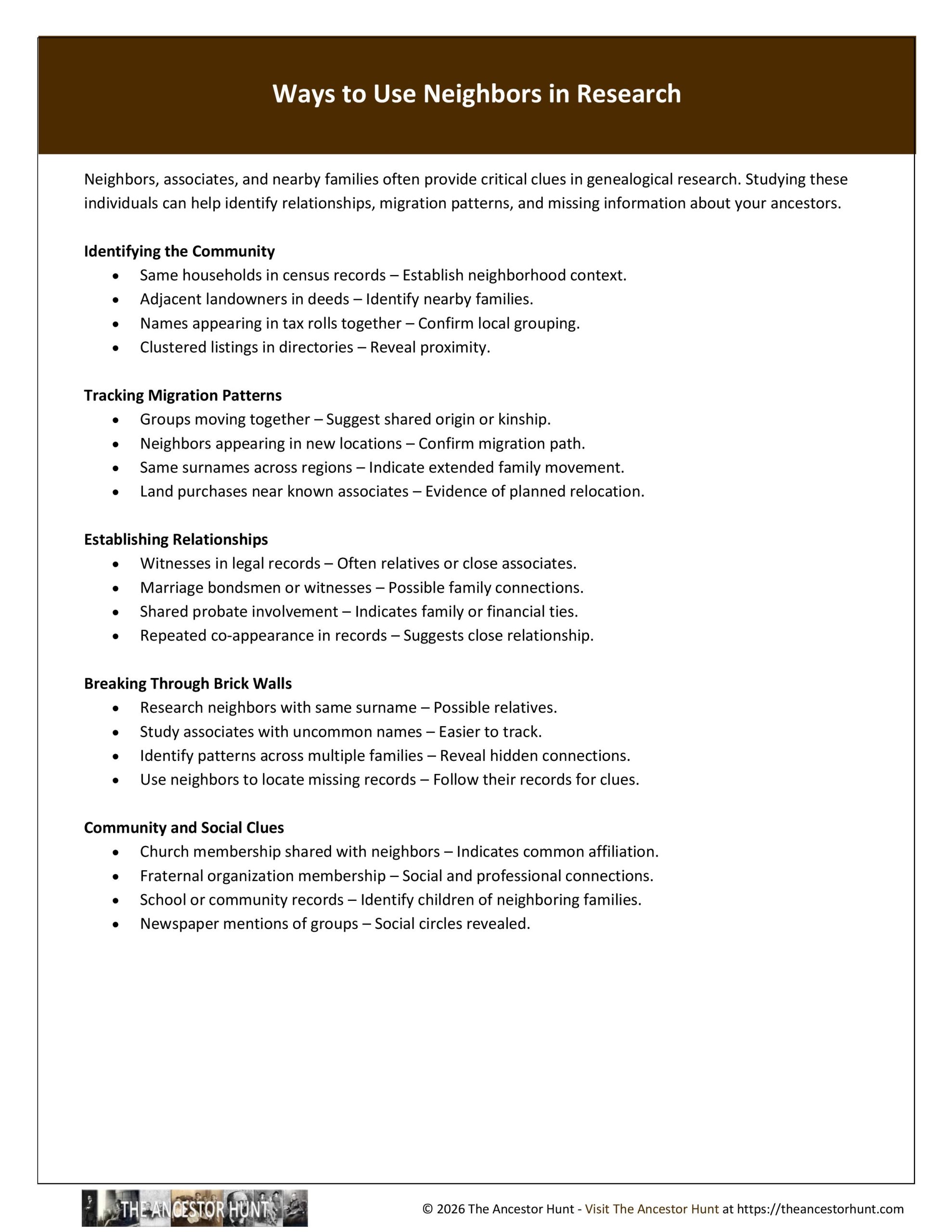
Neighbors, associates, and nearby families often provide critical clues in genealogical research. Studying these individuals can help identify relationships, migration patterns, and missing information about your ancestors.
Identifying the Community
- Same households in census records – Establish neighborhood context.
- Adjacent landowners in deeds – Identify nearby families.
- Names appearing in tax rolls together – Confirm local grouping.
- Clustered listings in directories – Reveal proximity.
Tracking Migration Patterns
- Groups moving together – Suggest shared origin or kinship.
- Neighbors appearing in new locations – Confirm migration path.
- Same surnames across regions – Indicate extended family movement.
- Land purchases near known associates – Evidence of planned relocation.
Establishing Relationships
- Witnesses in legal records – Often relatives or close associates.
- Marriage bondsmen or witnesses – Possible family connections.
- Shared probate involvement – Indicates family or financial ties.
- Repeated co-appearance in records – Suggests close relationship.
Breaking Through Brick Walls
- Research neighbors with same surname – Possible relatives.
- Study associates with uncommon names – Easier to track.
- Identify patterns across multiple families – Reveal hidden connections.
- Use neighbors to locate missing records – Follow their records for clues.
Community and Social Clues
- Church membership shared with neighbors – Indicates common affiliation.
- Fraternal organization membership – Social and professional connections.
- School or community records – Identify children of neighboring families.
- Newspaper mentions of groups – Social circles revealed.
Download the Quicksheet PDF
To obtain the Quicksheet PDF of this information, download it by clicking on the Download button below:
For all the previously published Quick Reference Guides, click on QuickSheets.
If you use Quicksheets often, the Quicksheet Vault puts 450+ of them in one organized place — clean, printable, and easy to reuse whenever you need them. Whether you keep digital references handy or build your own genealogy binder, the Vault makes research simpler. Learn more about the Quicksheet Vault HERE