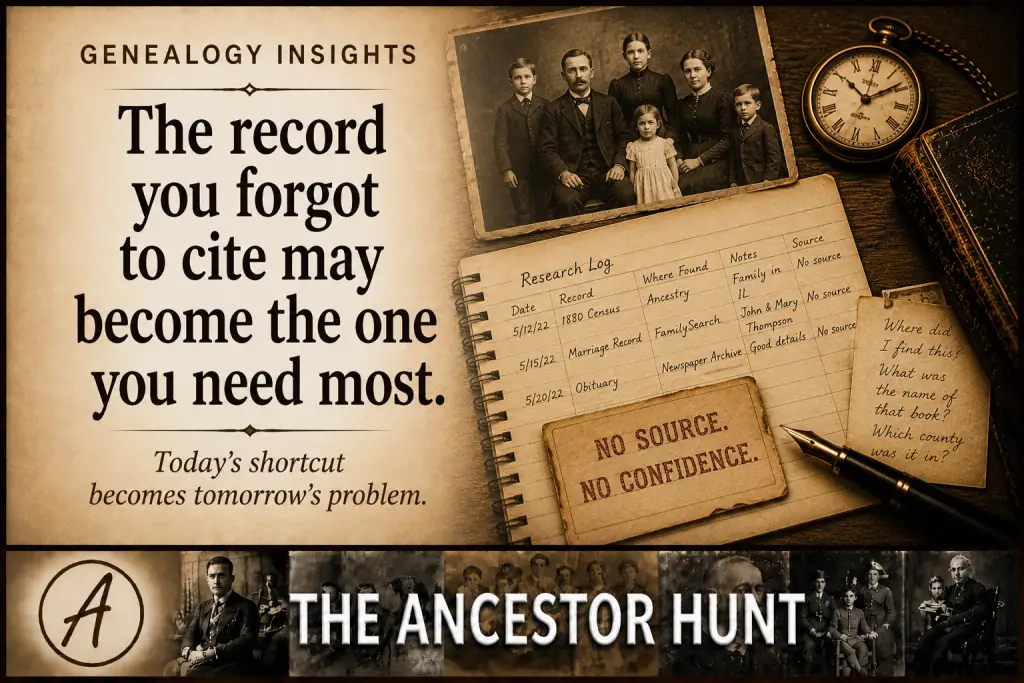
The record that solves tomorrow’s problem may be the one you cannot relocate today.
The Insight
Many genealogists carefully save records, screenshots, and downloaded documents but pay less attention to recording exactly where those records came from.
At first, this may not seem important. The information has been found, the ancestor has been identified, and the discovery feels complete.
Years later, however, the same record may become one of the most important pieces of evidence in a research problem. When that happens, researchers often discover they cannot remember which website, archive, database, book, newspaper, or repository originally contained the information.
A record without a source citation may answer a question today but create a larger problem tomorrow.
Why It Matters
- Conclusions should be supported by evidence.
- Sources allow findings to be verified.
- Citations make it easier to revisit records later.
- Research can be shared and evaluated by others.
- Missing citations often force researchers to repeat work.
Good genealogy depends not only on finding information but also on documenting where that information originated.
What To Look For
When reviewing your research, ask:
- Can I identify where this information came from?
- Do I know which record provided this fact?
- Could I find this document again if necessary?
- Does the citation include enough detail to locate the source?
- Have I recorded both online and physical repositories?
If the answer is no, the record may need additional documentation before it becomes difficult to relocate.
Research Action
Develop the habit of recording source information when the record is found rather than planning to add it later.
Include:
- Repository or website name
- Collection title
- Record type
- Volume or page numbers
- Image numbers when available
- URLs or access details when appropriate
Capturing source information immediately takes only a few moments and can save hours of future research.
Key Takeaway
Finding a record is only part of genealogy. Recording where it came from ensures that the evidence remains useful, verifiable, and accessible when future questions arise.
The Genealogy Insights Field Guides
Discover all 30 Genealogy Insights in the Field Guides Collection