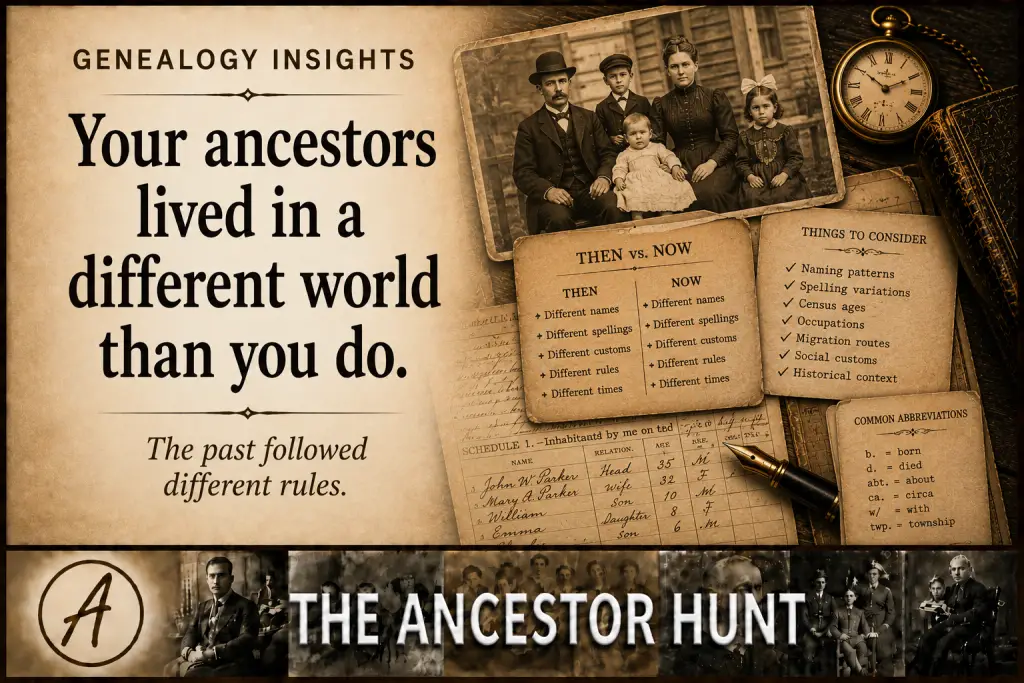
The past doesn’t become easier to understand until you stop expecting it to behave like the present.
The Insight
Historical records make far more sense when you understand the world your ancestors lived in.
Naming traditions, spelling variations, migration routes, census instructions, occupations, social customs, and even the meaning of common words were often very different from what we expect today.
A child might be named after a deceased sibling. Ages in census records may shift from decade to decade. Names may appear with multiple spellings—even within the same document. What seems inconsistent today may have been completely normal at the time.
Why it Matters
Many research mistakes happen because we interpret historical records through modern expectations.
The more you understand the customs, language, laws, and daily life of your ancestor’s world, the easier it becomes to recognize why records were created the way they were—and why they sometimes appear to contradict one another.
Historical context turns confusion into understanding.
What to Look For
- Naming traditions
- Spelling variations
- Census instructions
- Occupations
- Migration routes
- Social customs
- Historical context
- Period terminology and abbreviations
Research Action
When a historical record seems confusing or contradictory, resist the temptation to judge it by modern standards.
Instead:
- Learn about the customs and traditions common during your ancestor’s lifetime.
- Read about the laws, social practices, and historical events that affected everyday life.
- Consider how naming patterns, occupations, and family relationships differed from today.
- Look up unfamiliar historical terms, abbreviations, and expressions before drawing conclusions.
- Ask yourself, “Would this have seemed normal to someone living at that time?”
The more you understand the world your ancestors lived in, the easier it becomes to recognize the meaning behind their records. Historical context often explains what modern assumptions cannot.
Key Takeaway
Your ancestors weren’t living by today’s rules.
They lived in a different time, with different customs, different language, and different expectations.
The better you understand their world, the easier it becomes to understand their records.
The Genealogy Insights Field Guides
Discover all 30 Genealogy Insights in the Field Guides Collection