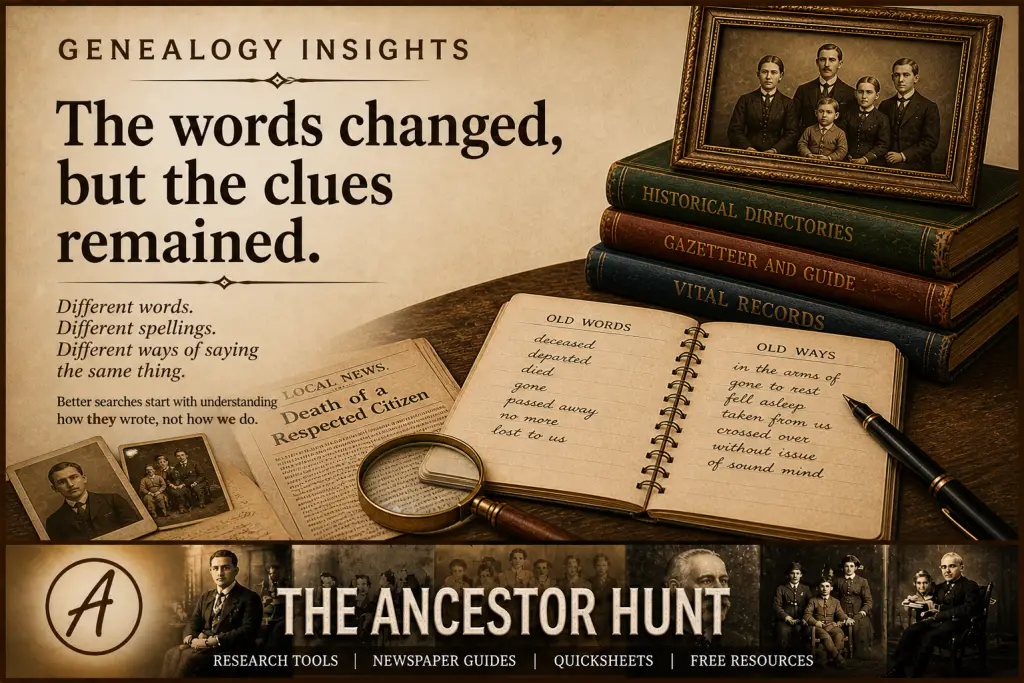
The record may be there. You’re just searching with the wrong century’s vocabulary.
The Insight
Genealogists often hit a wall because they search for the words we use today, not the words that appeared in older records. A record may exist, an article may be indexed, and the clue may be sitting in plain sight—but if the search terms do not match the language of the time, it stays hidden.
This matters because older newspapers, directories, legal notices, and local histories often used different vocabulary for everyday events. Illnesses, occupations, relationships, social events, immigration details, and even deaths were described in ways that may not seem obvious now. The record did not disappear. The wording changed.
Researchers who understand historical language gain a significant advantage. They recognize that an ancestor may appear under an unfamiliar occupation, that a death notice may never use the word “death,” or that a social event may be described using terms rarely seen today.
A better search starts by asking, “How would this have been described then?”
Why it Matters
- Historical records often use unfamiliar words and phrases.
- Modern search terms can overlook valuable records.
- Older newspapers frequently describe events differently than we do today.
- Understanding period language expands your search options.
- Better searches often begin with better vocabulary.
What to Look For
Pay attention to:
- Historical occupations and trade terms.
- Period descriptions of illnesses and causes of death.
- Abbreviations commonly used in newspapers and directories.
- Alternate spellings and older word forms.
- Social and legal terminology that has fallen out of use.
- Euphemisms and indirect references to life events.
Ask yourself: How would a newspaper editor, clerk, or record keeper have described this event at the time?
Research Action
Choose one genealogy topic you are currently researching.
Then:
- Identify the modern terms you are using.
- Look for historical alternatives and period phrases.
- Search newspapers using those older terms.
- Review directories, legal notices, and local histories for similar language.
- Record any new words you discover for future searches.
Small vocabulary changes often lead to completely different results.
Key Takeaway
The clues are often still there, waiting to be found. The challenge is learning to search using the language of the people who created the records, not the language we use today.
The Genealogy Insights Field Guides
Discover all 30 Genealogy Insights in the Field Guides Collection