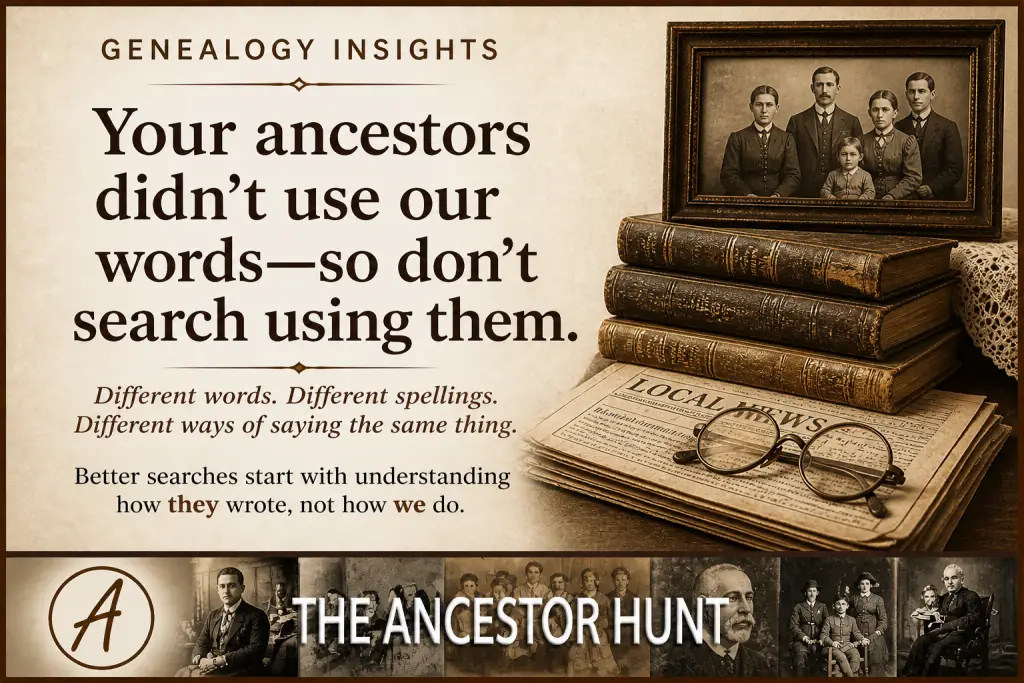
Most genealogists search using modern language—but older records weren’t written that way. Newspapers, directories, and official documents often used abbreviations, alternate spellings, and terms that feel unfamiliar today. If you’re only searching what looks “normal” now, you’re unintentionally filtering out a huge portion of what actually exists.
This is especially true in newspapers. Space mattered. Ink cost money. Editors shortened names, used initials, and relied on phrases that made sense at the time—but don’t match how we search now. A “William” might appear as “Wm.” A death might be described without using the word “death” at all. If your searches don’t account for this, you’ll miss articles that are sitting right there.
The shift is simple but powerful: start thinking like the people who created the records, not the people searching them today. Look for variations. Expect differences. And when something doesn’t show up, assume it might be hiding under a different word or form—not that it isn’t there. It’s often hiding in plain sight.
Additional Information
- Research Tools – https://theancestorhunt.com/tools
- Newspaper Research Guides – https://theancestorhunt.com/academy
- Quicksheets – https://theancestorhunt.com/quicksheets
- Free Genealogy Resources by Category – https://theancestorhunt.com/resources
More Genealogy Insights