Background
Historical Occupation Profiles explain what ancestors actually did for a living and how those occupations shaped the records genealogists rely on today.
Occupation Overview
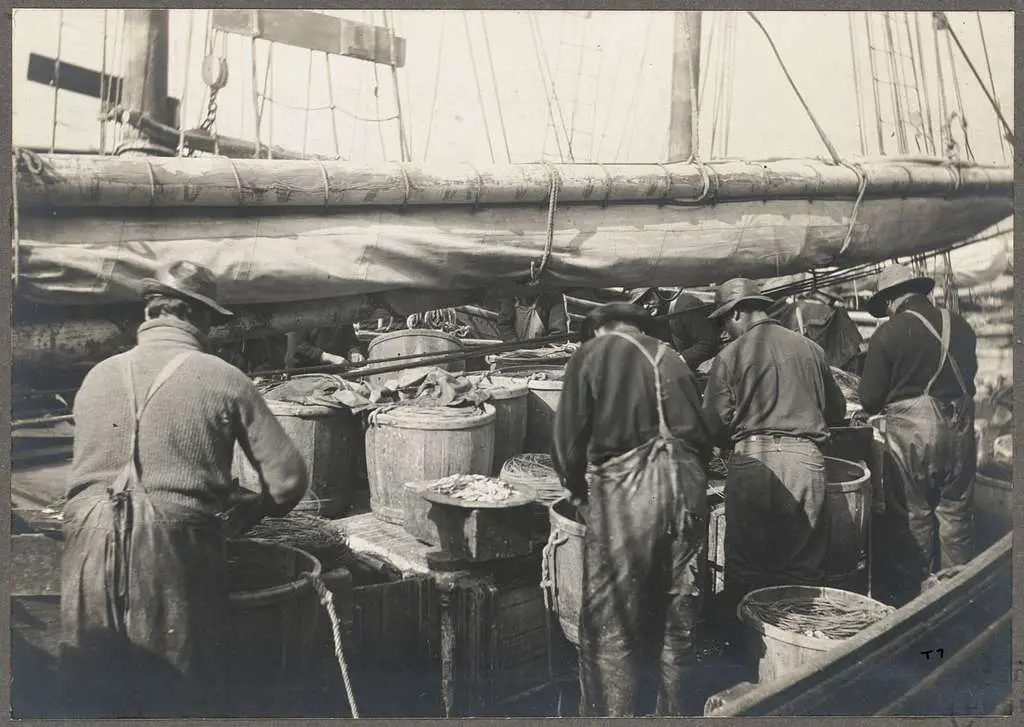
Fishermen harvested fish and other seafood from oceans, rivers, and lakes for food and commercial sale. In the eighteenth, nineteenth, and early twentieth centuries, fishing was a major occupation in coastal communities and along inland waterways.
Fishing supported local economies and food systems, with both small-scale individual fishermen and larger commercial operations supplying markets. Many fishermen worked seasonally, depending on weather and fish migration patterns.
How the Job Was Described
Historical records may list:
- Fisherman
- Seaman (fishing context)
- Boatman
- Oysterman
- Lobsterman
- Net fisherman
- Laborer (fishing context)
Specific terms may reflect the type of fishing or the region in which the work was performed.
Duties & Daily Work
Fishermen performed tasks such as:
- Catching fish using nets, lines, or traps
- Preparing and maintaining fishing equipment
- Operating boats and navigating waterways
- Sorting and storing catches
- Repairing nets and gear
- Transporting fish to markets or docks
Work often began early and was influenced by tides, seasons, and weather conditions.
Tools, Equipment & Work Environment
Fishing relied on equipment such as:
- Boats and small vessels
- Nets, lines, and traps
- Hooks and bait
- Storage containers for catches
- Navigation tools
Work environments included open water, docks, and shoreline facilities. Conditions could be unpredictable and physically demanding.
Employment Structure & Work Patterns
Fishermen were commonly:
- Independent workers
- Part of small crews
- Employed by commercial fishing operations
- Members of family-based fishing enterprises
Work could be seasonal or year-round depending on location and type of fishing.
Many fishing communities were tightly connected, with multiple generations engaged in the trade.
Records Created by Fishing Work
Fishermen may appear in:
- Census records
- Fishing licenses and permits
- Boat registrations
- Port or harbor records
- Local directories
- Newspaper accounts of fishing activity
Because fishing was often local and informal, records may vary depending on region.
A Note on Historical Context
Fishing has long been a foundational occupation in coastal and river communities. The growth of commercial fishing expanded the scale of operations and increased the demand for labor.
Technological changes, including improved boats and equipment, influenced how fishing was conducted over time.
Fishing communities often developed distinct cultural identities tied to maritime life.
Newspapers & Periodicals
Fishermen appear in newspapers through:
- Reports of fishing yields
- Accidents at sea
- Weather-related incidents
- Local economic reports
- Obituaries referencing fishing careers
Fishing activity was often reported in coastal and regional newspapers.
Risks, Hazards & Working Conditions
Fishing was a dangerous occupation, with risks including:
- Drowning
- Storm-related accidents
- Equipment injuries
- Exposure to harsh weather
- Long hours and physical strain
Fatal incidents were not uncommon and may be documented in newspapers or maritime records.
Industry Terminology (Selected)
- Net – Tool used to catch fish
- Catch – Quantity of fish harvested
- Dock – Landing area for boats
- Crew – Group working on a fishing vessel
- Trap – Device used to capture fish or shellfish
These terms frequently appear in maritime records and local accounts.
Selected Free Research Starting Points
Researchers may find useful background materials and contextual resources through:
- Library of Congress collections related to maritime life
- National Archives records involving fisheries and coastal activity
- State archives preserving fishing licenses and maritime records
- Local historical societies documenting fishing communities
- Internet Archive and HathiTrust collections of fishing manuals and maritime guides
Availability varies by region and era, but these sources provide valuable context for understanding fishing work.
Why Fishermen Matter to Genealogical Research
Fishermen were central to coastal and river communities and often appear in census and local records. Understanding fishing occupations helps genealogists interpret geographic ties, seasonal work patterns, and family involvement in maritime economies.
If you use Quicksheets often, the Quicksheet Vault puts 450+ of them in one organized place — clean, printable, and easy to reuse whenever you need them. Whether you keep digital references handy or build your own genealogy binder, the Vault makes research simpler. Learn more about the Quicksheet Vault HERE