Background
Historical Occupation Profiles explain what ancestors actually did for a living and how those occupations shaped the records genealogists rely on today.
Occupation Overview
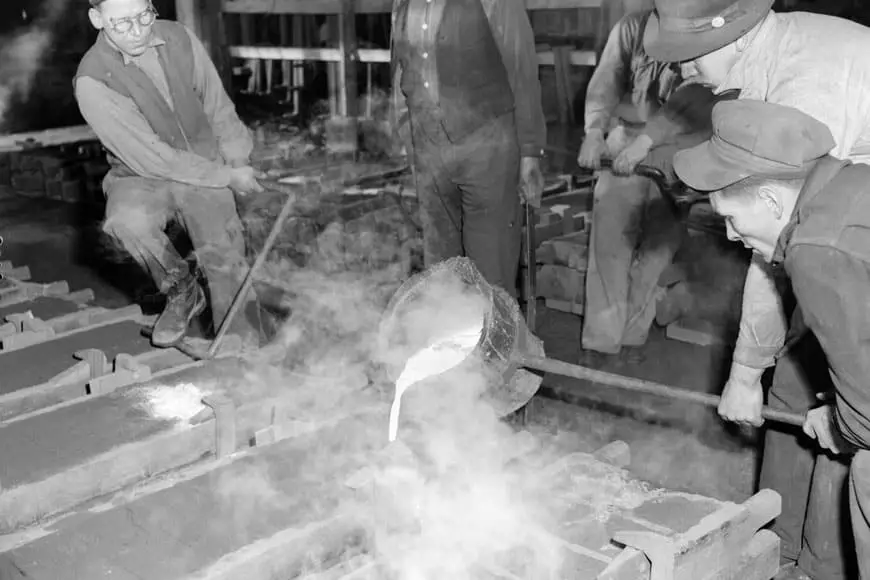
Foundry workers produced metal castings by melting metal and pouring it into molds to create tools, machine parts, and structural components. In the nineteenth and early twentieth centuries, foundries were central to industrial production, supplying parts for railroads, factories, construction, and machinery.
Foundries ranged from small local operations to large industrial plants. Workers were involved in multiple stages of metal casting, contributing to the growth of manufacturing and infrastructure.
How the Job Was Described
Historical records may list:
- Foundry worker
- Molder
- Core maker
- Caster
- Furnace man
- Iron worker (foundry context)
- Laborer (foundry context)
Specific titles often reflected specialized roles within the casting process.
Duties & Daily Work
Foundry workers performed tasks such as:
- Melting metal in furnaces
- Preparing molds for casting
- Pouring molten metal into molds
- Removing and finishing castings
- Cleaning and maintaining equipment
- Inspecting finished metal parts
Work was often divided into specialized roles, with each worker responsible for a specific stage of production.
Tools, Equipment & Work Environment
Foundry work relied on equipment such as:
- Furnaces and melting pots
- Molds and casting forms
- Ladles for pouring molten metal
- Tongs and protective tools
- Sand for mold creation
Work environments were extremely hot and physically demanding, with exposure to heat, noise, and industrial materials.
Employment Structure & Industrial Organization
Foundry workers were typically employed by:
- Manufacturing companies
- Iron and steel plants
- Machine shops
- Industrial foundries
- Construction-related industries
Large foundries employed many workers, often organized into departments based on specific tasks.
Records Created by Foundry Work
Foundry workers may appear in:
- Census records
- Company payroll and employment records
- Union membership records
- Industrial accident reports
- City directories
- Newspaper accounts of industrial activity
Because foundries were major employers, workers often appear in clusters within industrial communities.
A Note on Historical Context
Foundries were essential to industrialization, producing components used in machinery, transportation, and construction. The growth of railroads and factories increased demand for metal castings.
Technological advances improved efficiency but also changed labor needs over time.
Foundry work was often associated with immigrant labor in industrial regions.
Newspapers & Periodicals
Foundry workers appear in newspapers through:
- Reports of industrial activity
- Accidents and workplace incidents
- Labor disputes or strikes
- Factory openings or closures
- Obituaries referencing years of industrial work
Industrial news was often covered in local newspapers.
Risks, Hazards & Working Conditions
Foundry work was highly hazardous, with risks including:
- Burns from molten metal
- Heat exhaustion
- Injuries from heavy materials
- Exposure to fumes and dust
- Machinery-related accidents
Serious incidents were often documented in newspapers or industrial records.
Industry Terminology (Selected)
- Mold – Form used to shape molten metal
- Casting – Finished metal product
- Core – Insert used to create hollow spaces in castings
- Furnace – Equipment used to melt metal
- Ladle – Tool used to pour molten metal
These terms frequently appear in industrial records and trade descriptions.
Selected Free Research Starting Points
Researchers may find useful background materials and contextual resources through:
- Library of Congress collections related to industry and labor
- National Archives records involving manufacturing and employment
- State archives preserving industrial and company records
- Local historical societies documenting factory communities
- Internet Archive and HathiTrust collections of foundry manuals and industrial guides
Availability varies by region and era, but these sources provide valuable context for understanding foundry work.
Why Foundry Workers Matter to Genealogical Research
Foundry workers were part of the industrial workforce that powered manufacturing and infrastructure development. Understanding their work helps genealogists interpret employment patterns, immigrant labor, and the growth of industrial communities.
If you use Quicksheets often, the Quicksheet Vault puts 450+ of them in one organized place — clean, printable, and easy to reuse whenever you need them. Whether you keep digital references handy or build your own genealogy binder, the Vault makes research simpler. Learn more about the Quicksheet Vault HERE