Background
Historical Occupation Profiles explain what ancestors actually did for a living and how those occupations shaped the records genealogists rely on today.
Occupation Overview
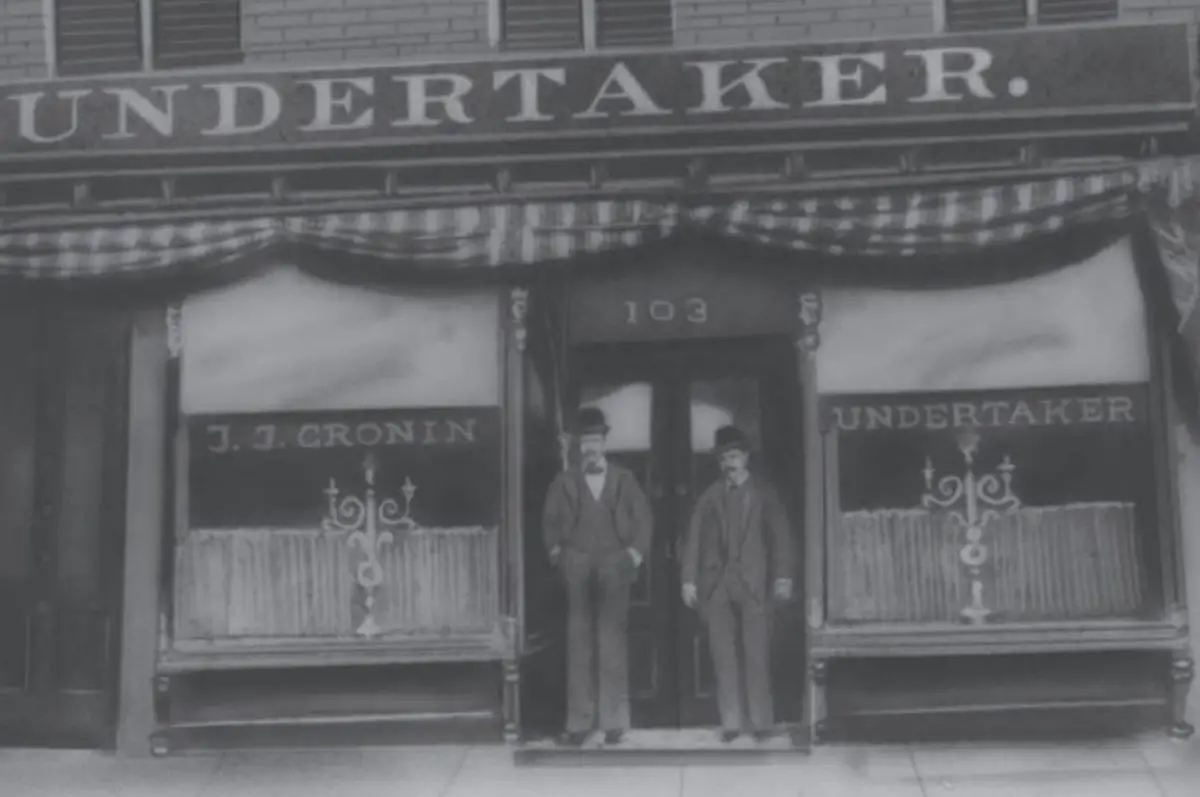
Undertakers managed funeral arrangements, burial preparation, and related services for families and communities. In the nineteenth and early twentieth centuries, undertakers became increasingly important as funeral practices became more formalized and professionalized.
Early undertakers often combined their work with furniture making or carpentry, particularly because coffins were constructed locally. Over time, undertaking developed into a specialized profession focused on funeral services and burial arrangements.
How the Job Was Described
Historical records may list:
- Undertaker
- Funeral director
- Mortician
- Embalmer
- Coffin maker
- Cabinet maker (funeral context)
In earlier records, undertakers may overlap with cabinet makers or furniture dealers.
Duties & Daily Work
Undertakers performed tasks such as:
- Preparing bodies for burial
- Arranging funerals and services
- Constructing or supplying coffins
- Coordinating transportation and burial logistics
- Maintaining funeral equipment and facilities
- Working with grieving families
By the late nineteenth century, embalming and formal funeral services became more common.
Tools, Equipment & Work Environment
Undertaking relied on equipment such as:
- Coffins and caskets
- Funeral carriages or hearses
- Embalming tools and supplies
- Preparation tables and equipment
- Funeral service furnishings
Work environments included funeral parlors, workshops, and family residences where services were sometimes held.
Employment Structure & Business Patterns
Undertakers were typically:
- Independent business owners
- Operators of family-run funeral homes
- Associated with furniture or cabinet businesses
- Licensed professionals (later periods)
Funeral businesses were often passed through generations within families.
Records Created by Undertaking Work
Undertakers may appear in:
- City directories
- Business advertisements
- Licensing records
- Death and burial records
- Probate records
- Newspaper funeral notices
Because undertakers worked closely with death records, they may appear in multiple local record sets.
A Note on Historical Context
Funeral practices changed significantly during the nineteenth century, especially following the spread of embalming after the American Civil War.
As communities grew, undertaking evolved from a secondary trade into a specialized profession with dedicated facilities and services.
Understanding these changes helps explain shifts in occupational titles and business structures.
Newspapers & Periodicals
Undertakers appear in newspapers through:
- Business advertisements
- Funeral notices
- Obituaries
- Partnership announcements
- Community and social news
Funeral businesses were often highly visible within local communities.
Risks, Challenges & Working Conditions
Undertaking involved challenges such as:
- Exposure to disease and illness
- Long or irregular working hours
- Emotional demands of working with grieving families
- Economic dependence on local population size
- Need for professional reputation and trust
Working conditions evolved as funeral services became more formalized.
Industry Terminology (Selected)
- Hearse – Vehicle used to transport the deceased
- Embalming – Preservation process for bodies
- Mortician – Funeral professional
- Casket – Burial container
- Funeral parlor – Facility used for funeral services
These terms frequently appear in funeral records and advertisements.
Selected Free Research Starting Points
Researchers may find useful background materials and contextual resources through:
- Library of Congress collections related to social history and funeral practices
- National Archives records involving licensing and public health
- State archives preserving funeral and burial records
- Local historical societies documenting funeral homes and community history
- Internet Archive and HathiTrust collections of funeral manuals and trade publications
Availability varies by region and era, but these sources provide valuable context for understanding undertaking work.
Why Undertakers Matter to Genealogical Research
Undertakers were closely connected to community life and death records. Understanding their work helps genealogists interpret funeral practices, burial customs, and the development of professional funeral services within local communities.
If you use Quicksheets often, the Quicksheet Vault puts 450+ of them in one organized place — clean, printable, and easy to reuse whenever you need them. Whether you keep digital references handy or build your own genealogy binder, the Vault makes research simpler. Learn more about the Quicksheet Vault HERE