You found your ancestor’s marriage certificate. Case closed? Not necessarily. Marriage certificates can contain valuable clues about the couple, their parents, witnesses, and the circumstances of the wedding. But the certificate you found may not be the only version of the record—and another version could contain information that yours does not.
Introduction
A marriage certificate is a document confirming that a marriage took place. Depending on the jurisdiction and period, it may have been issued by a government authority, completed by the person performing the ceremony, or provided by a religious institution.
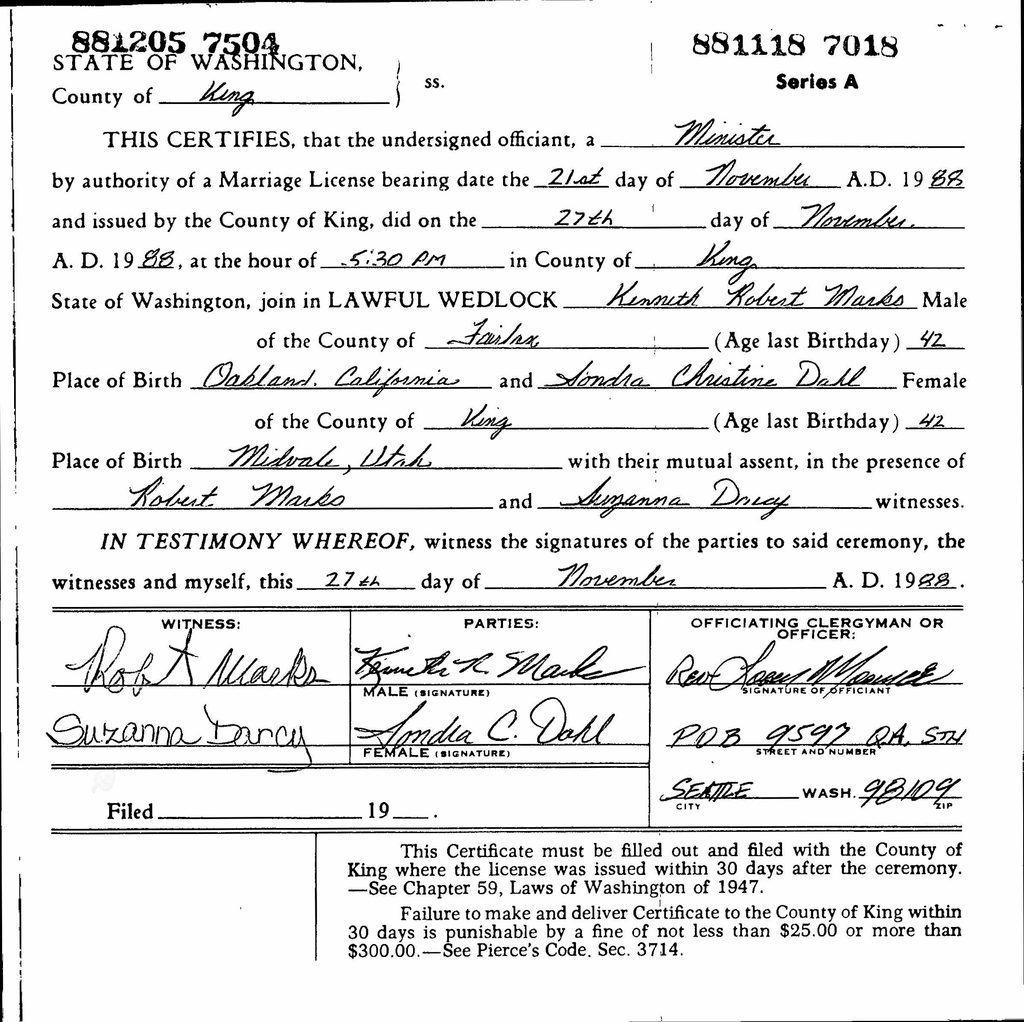
For genealogists, marriage certificates are among the most familiar marriage-related documents. They can establish when and where a marriage occurred and may provide additional information about the bride, groom, their families, and the people who participated in the ceremony.
However, not all marriage certificates contain the same information, and the certificate held by a family may differ from the official record maintained by the government or church.
Understanding those differences can lead to additional records and valuable genealogical discoveries.
What Might a Marriage Certificate Contain?
The information recorded on a marriage certificate varies considerably by location, period, and the type of certificate issued.
Depending on the document, it may include:
- Full names of the bride and groom
- Date and location of the marriage ceremony
- Ages or dates of birth
- Places of birth or residence
- Occupations
- Marital status, such as single, widowed, or divorced
- Names of parents
- Names of witnesses
- Name and title of the person performing the ceremony
- Name of the church or other location where the marriage occurred
- Signatures or marks of the couple, witnesses, or officiant
Some certificates contain only the couple’s names, marriage date, and location. Others provide extensive information about the couple and their families.
The amount of detail may also depend on whether the document is a civil certificate, religious certificate, or later certified copy of an official record.
The Family Certificate May Not Be the Official Record
One of the most important distinctions for genealogists is the difference between a marriage certificate given to the couple and the official record retained by the government or church.
In some jurisdictions, the couple received a certificate commemorating or documenting their marriage, while the officiant submitted a separate marriage return to the appropriate authority.
The information recorded on those documents may not be identical.
For example, a certificate preserved in a family Bible might contain the couple’s names, marriage date, and officiant’s signature. The official marriage register could also identify witnesses, residences, ages, or parents.
The reverse is also possible. A family certificate may contain handwritten details or signatures that were not copied into the official register.
If you have a marriage certificate passed down through your family, don’t assume that you have found every surviving record of the marriage.
Look for the corresponding civil registration, marriage return, church register, or other original documentation.
Civil and Religious Marriage Certificates
A couple may have received a marriage certificate from a government authority, a religious institution, or both.
Civil certificates document marriages under the applicable laws and registration procedures of the jurisdiction.
Religious certificates may have been issued by the church, congregation, or officiant who performed the ceremony.
Depending on the location and period, the religious ceremony and civil registration may have generated separate records.
For example, a church marriage certificate might identify the minister and congregation, while the corresponding civil record could include additional information required by the government.
When researching a marriage performed in a church or other religious setting, investigate whether both civil and religious records survive.
Don’t Overlook the Witnesses
Marriage certificates sometimes identify the individuals who witnessed the ceremony.
These names can be particularly valuable when researching a couple whose parents or other family relationships are difficult to establish.
A witness might have been a sibling, parent, cousin, friend, neighbor, or another person associated with the couple.
However, a witness’s presence does not automatically establish a family relationship.
Research the witnesses independently. Look for them in census records, city directories, church registers, probate records, and other documents associated with the bride and groom.
If a witness repeatedly appears in records involving one of the families, that association may help establish a connection that was not immediately apparent from the marriage certificate alone.
A Certified Copy May Be Different from the Original
Many genealogists obtain marriage certificates by requesting certified copies from a government office.
A certified copy may reproduce the original marriage record, but some jurisdictions issue certificates that contain only selected information extracted from the official register.
For example, a modern certificate might provide the couple’s names, marriage date, and location while omitting witnesses, occupations, or other information recorded in the original document.
When requesting a marriage certificate, determine whether the issuing authority offers a full copy of the original record or a shorter certified extract.
If additional information is needed, ask whether the original marriage register, license, application, or return can be examined separately.
A certified certificate may establish the marriage while still leaving valuable information in the underlying record undiscovered.
Pay Attention to the Dates
Marriage certificates may contain several dates, and they do not necessarily refer to the same event.
Depending on the document, you might encounter:
- Date the marriage license was issued
- Date the marriage ceremony occurred
- Date the marriage was registered
- Date the certificate was issued
- Date a certified copy was prepared
These dates may be identical, but they can also differ by days, weeks, or even years.
For example, a certificate issued in 1925 might document a marriage that occurred in 1880. The later date could represent when a replacement certificate was requested rather than when the couple married.
Read the wording carefully and record the actual marriage date separately from the date the certificate was issued or copied.
What If the Marriage Certificate Contains Incorrect Information?
Marriage certificates are valuable historical records, but they are not necessarily free from errors.
Names may have been misspelled, ages misstated, birthplaces recorded incorrectly, or parents’ names omitted or confused.
Some information may have been supplied directly by the couple, while other details may have been entered by an officiant or clerk.
A later certified copy or transcription could also introduce errors that were not present in the original record.
When information conflicts with other evidence, investigate the discrepancy rather than automatically accepting the certificate as correct.
Compare the information with marriage applications, church registers, census records, birth records, and other sources.
Where Might You Find Marriage Certificates?
Marriage certificates may survive in government offices, county courthouses, state or provincial archives, church collections, historical societies, family papers, and digitized genealogy databases.
Depending on the jurisdiction and period, they may be cataloged under:
- Marriage Certificates
- Marriage Records
- Marriage Registers
- Marriage Licenses and Certificates
- Marriage Returns
- Civil Registration Records
- Church Marriage Records
Family-held certificates may also appear in family Bibles, scrapbooks, photograph albums, personal correspondence, or collections donated to libraries and historical societies.
If you find an indexed marriage record online, investigate whether an image of the original certificate or register is available.
And if you already have a family certificate, search for the corresponding government or religious record.
The goal is not simply to find a marriage certificate. It is to discover what other records of that marriage may survive.
Key Takeaways
- A marriage certificate documents a marriage, but its contents vary by jurisdiction, period, and the type of certificate issued.
- Certificates may identify the couple, marriage date and location, parents, witnesses, occupations, residences, and officiant.
- A certificate given to the couple may contain different information from the official government or church record.
- Civil and religious marriage certificates may exist for the same marriage.
- Research the witnesses. They may provide clues to family relationships and other important associations.
- A modern certified copy may contain less information than the original marriage record.
- Distinguish the actual marriage date from the dates of registration, certificate issuance, or later certification.
- Evaluate the information carefully. Marriage certificates can contain errors or information supplied by people with incomplete knowledge.
- Search for the corresponding marriage application, license, return, and register entry whenever possible.
- Don’t overlook marriage certificates preserved in family Bibles, scrapbooks, and other family papers.
Examples