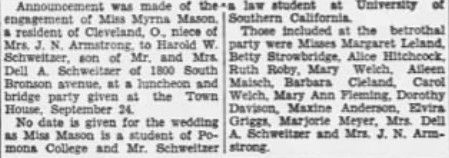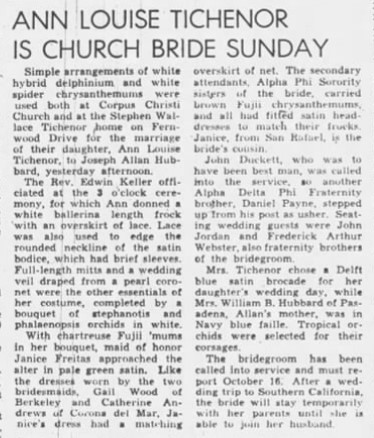
Your ancestors’ wedding may have made the newspaper—but have you looked for their engagement announcement, too? Together, these two notices may reveal parents, siblings, residences, occupations, and other people connected to the couple. Comparing them can also uncover changes in wedding plans and provide clues that neither announcement offers on its own.
Introduction
Newspaper engagement and wedding announcements are valuable sources of information about a couple and the families connected to their marriage.
An engagement announcement reports that a couple intends to marry. A wedding announcement reports that a marriage has taken place, often describing the ceremony and the people who participated.
Depending on the newspaper, period, and the prominence of the families in the community, these announcements may range from a single sentence to a lengthy account of the couple’s backgrounds, wedding preparations, ceremony, and reception.
For genealogists, the value of these notices extends well beyond identifying the bride, groom, and wedding date. They may name relatives, provide former residences, identify occupations, and reveal relationships that are difficult to establish through conventional marriage records.
When both an engagement announcement and a wedding announcement survive, comparing them can be especially useful.
What Might an Engagement Announcement Contain?
An engagement announcement typically identifies a couple who plans to marry. Some announcements provide little additional information, while others offer a surprisingly detailed introduction to both families.
Depending on the newspaper and period, an announcement may include:
- Names of the prospective bride and groom
- Names of their parents or other relatives
- Residences of the couple and their families
- Occupations or employers
- Schools or colleges attended
- Military service
- Previous residences or hometowns
- An anticipated wedding date or season
- The church or location where the wedding is planned
- Information about an engagement party or other celebration
An engagement announcement may also identify a parent who has died or indicate that a parent has remarried.
For example, a prospective bride might be described as the daughter of a named couple, the daughter of a widow, or the granddaughter of relatives with whom she was living.
Such descriptions can provide leads to earlier marriages, death records, census entries, and other family documents.
Remember that an engagement announcement reports an intention to marry. It does not establish that the marriage actually occurred.
What Might a Wedding Announcement Contain?
A wedding announcement reports a marriage that has taken place. It may appear shortly after the ceremony, although the interval between the wedding and publication can vary.
Depending on the newspaper and period, a wedding announcement may include:
- Names of the bride and groom
- Date and location of the wedding
- Names of parents and other relatives
- Name of the officiant
- Name of the church or other ceremony location
- Names of attendants, including the maid of honor and best man
- Names of bridesmaids, groomsmen, and other wedding participants
- Names of guests or relatives who traveled to attend
- Residences, occupations, and educational backgrounds of the couple
- Information about the reception or wedding trip
- The couple’s intended residence after the wedding
Some announcements describe the wedding in considerable detail, including the ceremony, decorations, clothing, music, and reception.
Although those descriptions may not directly establish a family relationship, they can help place the couple within a particular community and provide a fuller picture of the event.
Look Beyond the Bride and Groom
The most useful genealogical clues in an announcement may concern people other than the couple.
Parents, grandparents, siblings, cousins, and other relatives may be named in descriptions of the families or wedding party.
A wedding announcement might identify the bride’s sister as maid of honor, the groom’s brother as best man, or an aunt who traveled from another state to attend the ceremony.
An engagement announcement might name a parent living in a different community or describe the prospective bride as the granddaughter of a particular couple.
These details can help identify family members, establish possible relationships, and suggest additional locations to research.
Pay particular attention to people whose relationship to the bride or groom is stated explicitly. A named sibling, aunt, or grandparent may provide a useful lead when conventional records are incomplete.
At the same time, do not assume that every attendant or guest was a relative. Friends, neighbors, coworkers, and other associates frequently participated in weddings.
Research those individuals before drawing conclusions about their relationships to the couple.
Compare the Engagement and Wedding Announcements
When both announcements survive, read them side by side.
An engagement announcement describes what the couple planned. A wedding announcement reports what happened.
The two may agree on nearly every detail, but differences can be revealing.
For example:
- Wedding date: Was the ceremony held on the date originally announced, or was it postponed?
- Location: Did the couple marry in the church or community initially identified?
- Family information: Does one announcement name parents or relatives omitted from the other?
- Wedding party: Were different attendants named in the final wedding report?
- Residences: Did either member of the couple move between the engagement and wedding?
- Intended residence: Does the wedding announcement identify where the newly married couple planned to live?
A difference does not necessarily indicate an error. Wedding plans can change, and newspaper announcements may have been written at different times using information supplied by different people.
If an engagement announcement is found but no corresponding wedding announcement appears, investigate whether the marriage occurred as planned. Search marriage registers, civil records, church records, and newspapers in other locations.
Do not enter an anticipated wedding date from an engagement announcement into your family tree as an established marriage date without supporting evidence.
Watch for Clues to Earlier Generations
Announcements sometimes include family information that reaches beyond the couple’s parents.
A wedding report may mention a grandparent who attended the ceremony, an uncle who escorted the bride, or relatives who hosted a reception.
An engagement announcement may identify the prospective bride or groom as the grandchild of a particular couple or refer to a family’s former residence.
These details can be especially valuable when researching a family that moved between communities.
For example, an announcement published where the bride currently lived might identify her parents as residents of another state. That location could lead to earlier census records, birth records, school records, and newspaper articles.
The announcement may also provide a married surname for a sister, aunt, or other female relative whose later records have been difficult to locate.
Search in More Than One Newspaper
Engagement and wedding announcements were not necessarily published only where the ceremony occurred.
An announcement might appear in:
- The bride’s current hometown
- The groom’s current hometown
- A community where either family previously lived
- A college or university town
- A newspaper serving the location where the wedding took place
If the couple or their parents lived in different communities, search newspapers associated with each location.
A brief wedding notice in one newspaper might be accompanied by a much longer account in another.
The wording may also differ. One newspaper might focus on the bride’s family, while another provides more information about the groom and his relatives.
Use Flexible Search Terms
Newspaper announcements may not use the exact phrases engagement announcement or wedding announcement.
Try searching for the couple’s names individually and together, along with phrases such as:
- “engagement announced”
- “to be married”
- “will wed”
- “approaching marriage”
- “married”
- “were united in marriage”
- “wedding solemnized”
- “nuptials”
- “bride of”
- “became the bride of”
Search using variations of given names, initials, nicknames, and surnames.
For a bride, search both her maiden name and married name. A wedding report may refer to her by her maiden name in the opening sentence and her married name elsewhere.
If you know the approximate wedding date, search newspapers from the weeks before and after the ceremony. Engagement announcements may have appeared months earlier, while wedding reports may have been published days or weeks afterward.
Not every newspaper has been digitized or made searchable. Local libraries, historical societies, and newspaper archives may hold issues that are unavailable online.
Evaluate the Information Carefully
Newspaper announcements can provide valuable evidence, but their details should be checked against other records.
An engagement announcement may describe plans that later changed. A wedding announcement may contain mistakes in names, ages, dates, or family relationships.
Information may have been supplied by the couple, relatives, a newspaper correspondent, or another individual. A reporter or editor may also have shortened or altered the submitted text.
When an announcement conflicts with a marriage certificate, church register, or another source, investigate the discrepancy rather than automatically choosing one account.
Also distinguish between the date of the wedding and the date the announcement was published. They may not be the same.
A wedding announcement is evidence that a marriage was reported to have occurred. Whenever possible, locate the corresponding marriage certificate, register entry, or other official record to document the event.
Key Takeaways
- Engagement announcements report an intended marriage; wedding announcements report a marriage that has taken place.
- Both types of announcements may identify parents, relatives, residences, occupations, and other people connected to the couple.
- An engagement announcement is not proof that the marriage occurred.
- Wedding attendants and guests may provide clues to family relationships, but do not assume every named individual was a relative.
- Compare engagement and wedding announcements for differences in dates, locations, family information, and wedding plans.
- Search newspapers associated with both families, not just the community where the ceremony occurred.
- Try alternative names, initials, and a variety of phrases when searching digitized newspapers.
- Distinguish the wedding date from the newspaper publication date.
- Verify important details against marriage certificates, church registers, and other records whenever possible.
Examples