The Ancestor Hunt regularly adds and updates new collection links, as well as searches for and fixes broken links.
(This page's most recent update is May 2026)
Practical solutions for real genealogy research problems. Explore the new Field Guides
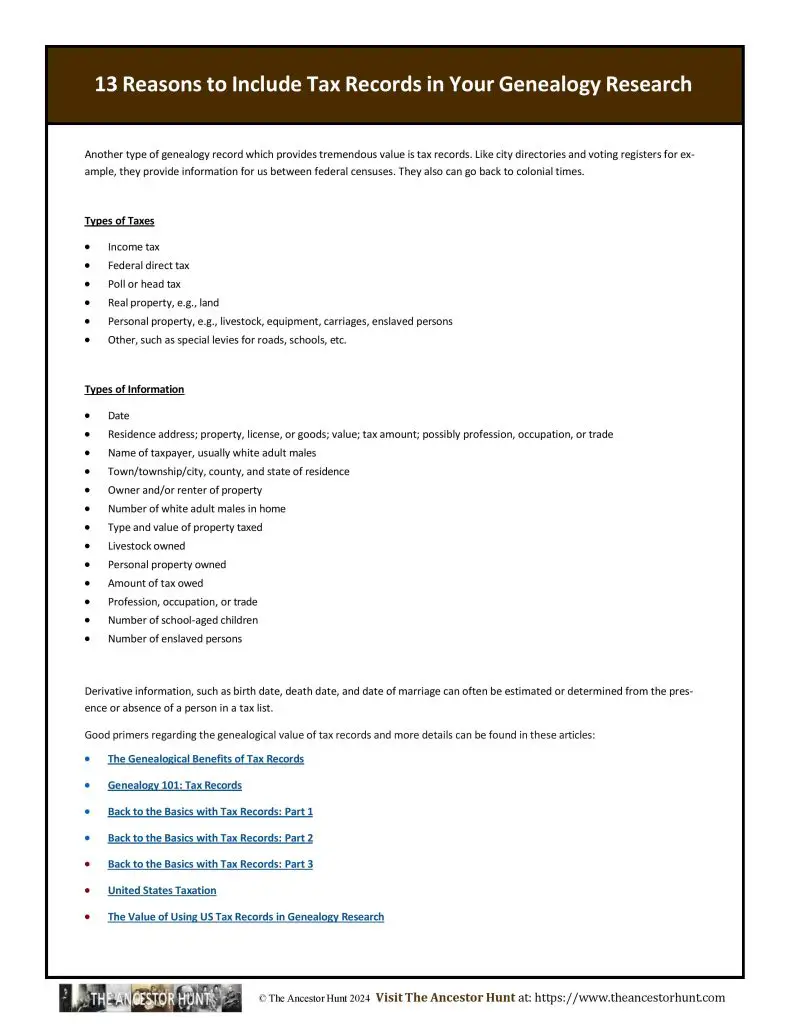
Another type of genealogy record that provides tremendous value is tax records. Like city directories and voting registers, for example, they provide information for us between federal censuses. They also can go back to colonial times.Below is a list that contains the different types of taxes since colonial times in the U.S., and the type of genealogical information that is available in these records.
Derivative information, such as birth date, death date, and date of marriage can often be estimated or determined from the presence or absence of a person in a tax list.
Types of Taxes
- Income tax
- Federal direct tax
- Poll or head tax
- Real property, e.g., land
- Personal property, e.g., livestock, equipment, carriages, enslaved persons
- Other, such as special levies for roads, schools, etc.
Types of Information
- Date
- Residence address; property, license, or goods; value; tax amount; possibly profession, occupation, or trade
- Name of taxpayer, usually white adult males
- Town/township/city, county, and state of residence
- Owner and/or renter of property
- Number of white adult males in home
- Type and value of property taxed
- Livestock owned
- Personal property owned
- Amount of tax owed
- Profession, occupation, or trade
- Number of school-aged children
- Number of enslaved persons
Good primers regarding the genealogical value of tax records and more details can be found in these articles:
- The Genealogical Benefits of Tax Records
- Genealogy 101: Tax Records
- Back to the Basics with Tax Records: Part 1
- Back to the Basics with Tax Records: Part 2
- Back to the Basics with Tax Records: Part 3
- United States Taxation
- The Value of Using US Tax Records in Genealogy Research
Download the Quicksheet PDF
To obtain the Quicksheet PDF of this information, download it by clicking on the Download button below:
For all the previously published Quick Reference Guides, click on QuickSheets.
If you use Quicksheets often, the Quicksheet Vault puts 390+ of them in one organized place — clean, printable, and easy to reuse whenever you need them. Whether you keep digital references handy or build your own genealogy binder, the Vault makes research simpler. Learn more about the Quicksheet Vault HERE