The Ancestor Hunt regularly adds and updates new collection links, as well as searches for and fixes broken links.
(This page's most recent update is May 2026)
Practical solutions for real genealogy research problems. Explore the new Field Guides
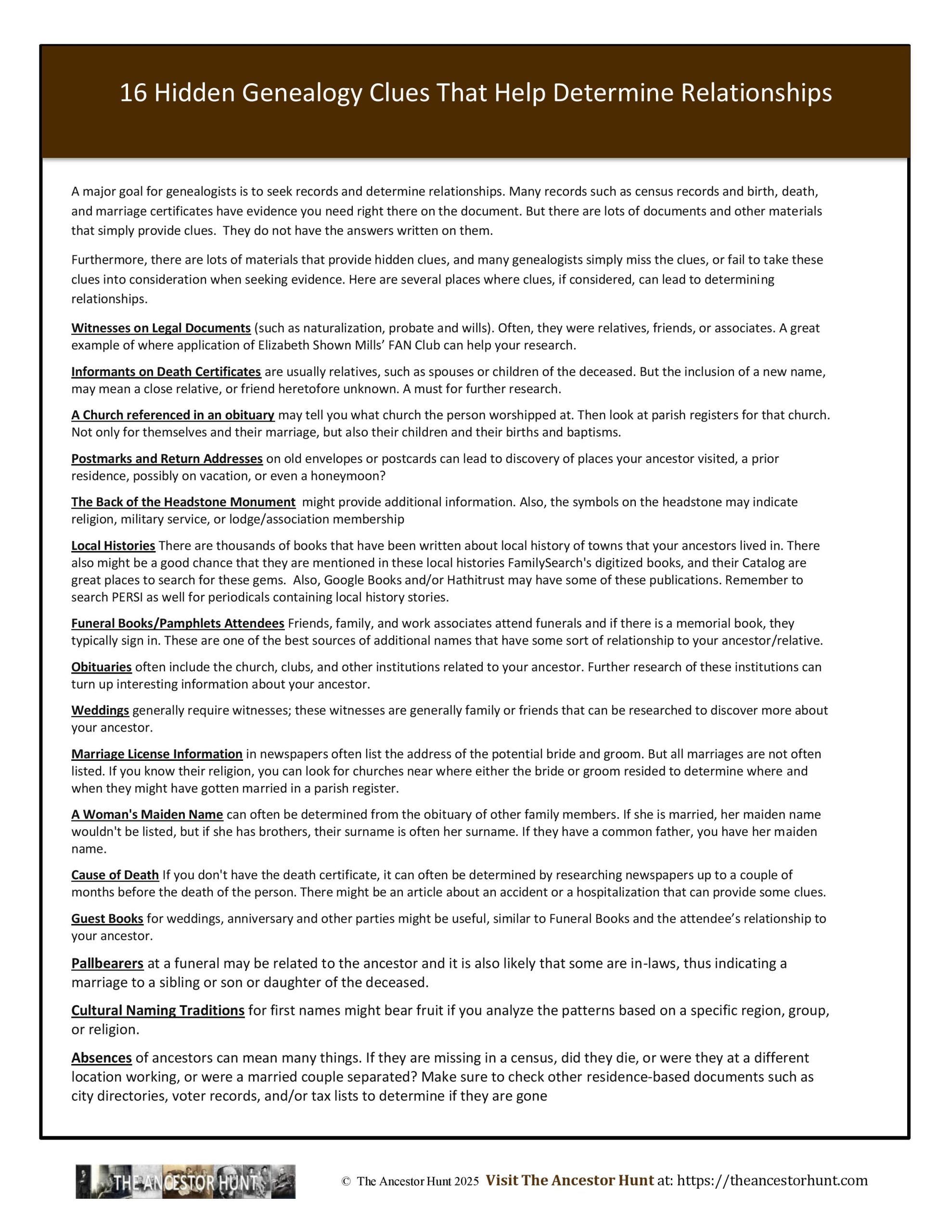
A major goal for genealogists is to seek records and determine relationships. Many records such as census records and birth, death, and marriage certificates have evidence you need right there on the document. But there are lots of documents and other materials that simply provide clues. They do not have the answers written on them.
Furthermore, there are lots of materials that provide hidden clues, and many genealogists simply miss the clues, or fail to take these clues into consideration when seeking evidence. Here are several places where clues, if considered, can lead to determining relationships.
Witnesses on Legal Documents (such as naturalization, probate and wills). Often, they were relatives, friends, or associates. A great example of where application of Elizabeth Shown Mills’ FAN Club can help your research.
Informants on Death Certificates are usually relatives, such as spouses or children of the deceased. But the inclusion of a new name, may mean a close relative, or friend heretofore unknown. A must for further research.
A Church referenced in an obituary may tell you what church the person worshipped at. Then look at parish registers for that church. Not only for themselves and their marriage, but also their children and their births and baptisms.
Postmarks and Return Addresses on old envelopes or postcards can lead to discovery of places your ancestor visited, a prior residence, possibly on vacation, or even a honeymoon?
The Back of the Headstone Monument might provide additional information. Also, the symbols on the headstone may indicate religion, military service, or lodge/association membership
Local Histories There are thousands of books that have been written about local history of towns that your ancestors lived in. There also might be a good chance that they are mentioned in these local histories FamilySearch’s digitized books, and their Catalog are great places to search for these gems. Also, Google Books and/or Hathitrust may have some of these publications. Remember to search PERSI as well for periodicals containing local history stories.
Funeral Books/Pamphlets Attendees Friends, family, and work associates attend funerals and if there is a memorial book, they typically sign in. These are one of the best sources of additional names that have some sort of relationship to your ancestor/relative.
Obituaries often include the church, clubs, and other institutions related to your ancestor. Further research of these institutions can turn up interesting information about your ancestor.
Weddings generally require witnesses; these witnesses are generally family or friends that can be researched to discover more about your ancestor.
Marriage License Information in newspapers often list the address of the potential bride and groom. But all marriages are not often listed. If you know their religion, you can look for churches near where either the bride or groom resided to determine where and when they might have gotten married in a parish register.
A Woman’s Maiden Name can often be determined from the obituary of other family members. If she is married, her maiden name wouldn’t be listed, but if she has brothers, their surname is often her surname. If they have a common father, you have her maiden name.
Cause of Death If you don’t have the death certificate, it can often be determined by researching newspapers up to a couple of months before the death of the person. There might be an article about an accident or a hospitalization that can provide some clues.
Guest Books for weddings, anniversary and other parties might be useful, similar to Funeral Books and the attendee’s relationship to your ancestor.
Pallbearers at a funeral may be related to the ancestor and it is also likely that some are in-laws, thus indicating a marriage to a sibling or son or daughter of the deceased.
Cultural Naming Traditions for first names might bear fruit if you analyze the patterns based on a specific region, group, or religion.
Absences of ancestors can mean many things. If they are missing in a census, did they die, or were they at a different location working, or were a married couple separated? Make sure to check other residence-based documents such as city directories, voter records, and/or tax lists to determine if they are gone.
Download the Quicksheet PDF
To obtain the Quicksheet PDF of this information, download it by clicking on the Download button below:
For all the previously published Quick Reference Guides, click on QuickSheets.
If you use Quicksheets often, the Quicksheet Vault puts 450+ of them in one organized place — clean, printable, and easy to reuse whenever you need them. Whether you keep digital references handy or build your own genealogy binder, the Vault makes research simpler. Learn more about the Quicksheet Vault HERE